Leaderboard
-
Katfid54
Certifiably Surly98Points5646Posts -
Celery Man
Certifiably Surly36Points13464Posts -
texifornia
Certifiably Surly34Points41989Posts -
OU Sucks
Legacy Members29Points7124Posts



Popular Content
Showing content with the highest reputation on 10/23/18 in Posts
-
17 points
-
Given a confluence of things about the Baylor game (our offense became a dumpster fire after Sam got injured; Machinator had a solid post highlighting some of our nice B.J. Foster-centric blitz schemes, and I was out of town all last week for work), I didn’t end up posting anything last week. In the last Xs & Os thread I posted, the posts turned to a really nice discussion of the mesh concept, the different ways its implemented, and how Urban Meyer/Herman have developed that concept separately from the air raid folks. With that discussion, I thought it might make sense to use this bye week to highlight another passing concept (and some of its variations) that I’m a big fan of: Mills. What the Fuck is “Mills”? Some of you are asking this exact question. “Mills” is a pass concept originally developed as part of the West Coast Offense scheme (originally called Fox 2 X/Y Hook), a play action pass designed to find an open tight end over the middle for a medium-sized (10-12 yard) gain. Here’s the play: The progression for the play is designed to hit the TE on a 10-12 yard hook route, filling in the space between the Mike and Sam (who must honor the run threat on play action) and the strong safety, who has to stay deep to honor the threat of the post. So why is it now called Mills? Because Steve Spurrier took this play and shot it up with crack. Instead of focusing on an intermediate route to a tight end, he fixated on the post. And the player who gained notoriety for streaking downfield and catching bombs on the play? Ernie Mills. How Does Mills Work? The question Spurrier had to answer was: How do you get the post open? How do you convince a safety with deep coverage responsibility to take an intermediate route, letting the post route fly past him? Spurrier’s answer: Find the person responsible for deep coverage, and run someone right at ‘em. Then, have that person break (either on an in-route or a hook) right in front of the defender, pulling them up in defense and letting the post sneak behind. Here’s what it looked like: The Evolution of Mills Some of you are watching that video and noting that those plays are run out of 21 personnel—a tight end, running back, and fullback—and only two wide receivers. You might be thinking to yourself: Why the fuck am I still reading this? There’s no way this concept still works. Except it does. It is true that defenses have been cognizant enough of this concept that it’s not generally workable as the only route concept being run on a given play. And linebackers are much more athletic than they were 20 years ago, so they’re able to get drops that disrupt the deep in. But coaches have found ways to mix Mills with the quick passing game, to attack every level of the defense at once. Here are some examples: First, over the last thirty years, Mills (and a similar play called “DDP” (Dig, Drive, Post)) became so prevalent in college football that pro teams using the concepts lumped them together in a concept called “NCAA”—named that because “everyone in the NCAA runs it.” Here’s what Mills/NCAA looks like, with a drive route and hitch on the backside: Oklahoma State Remember all those times the past few years Oklahoma State would fake inside zone with Justice Hill, then Mason Rudolph would step back, coolly wait a few seconds, and then throw a bomb to James Washington, streaking wide open down the middle of the field? You guessed it: Mills. Here’s oSu running Mills against OU: OU presents a pretty clear Cover 2/Cover 4 look. oSu runs one slot on a dig route (this is the Mills/NCAA concept I mention above). Their other slot runs the deep hook, right at the deep safety. Washington runs the deep post and by the time the ball gets to him, he’s three yards in front of the defender. Here’s another example against Tulsa: Now the outside receiver to the boundary runs the shallow cross (completing the Mills/NCAA route combo). The boundary slot receiver runs what appears to be a corner route, although it’s not very easy to be 100% sure, with the camera angle we get here. To the field side, the slot receiver runs the deep in (right to the sticks, giving the safety even more pressure to come up in support), and Rudolph puts the ball right in Washington’s breadbasket. This shit is almost not fair. West Virginia So Oklahoma State has continued to use Mills to great effect. It makes sense that WVU has, too, right? Here’s their look: It’s impossible to tell what the boundary receiver does on this play, other than to know that he doesn’t run an in-breaking route. That means WVU is not running Mills here with the NCAA (dig route) variation. Instead, they rely on their bubble screen look to freeze the defense. The strong safety actually WAY overplays the bubble screen, meaning he’s not even getting caught up in defending the deep in (although that’s the only route he can get back to cover). By the time Sills makes his break, he’s four yards in front of the defender and Grier has put the ball right on his hands. Would Mills Work at Texas? So now you’re saying: Great. Here’s a bunch of air raid teams running Mills. How the fuck is that useful to me, a Texas fan? Well, it’s useful to you because the one time I’ve seen Texas run Mills this year, it should have been a touchdown. What play, you’re wondering? I bet you remember it after I show you: That’s right. Sam’s overthrow on the first drive against KSU was running Mills. Here’s how we ran it: And here’s a better shot of the routes as they were run on the play: If Sam doesn’t miss on that ball, it’s a 55 yard walk-in TD by Duvernay, perfectly utilizing his skillset. Lethalize Mills So the shit I wrote above is basically the post. But I’d be remiss if I posted this without touching on one more concept that’s near and dear to my heart: Fully weaponizing Mills to its most lethal potential. Ignoring the fact that he’s one of the great chodes in the coaching industry, Bobby Petrino’s version of Mills is the best, most “weaponized” version I’ve seen. And it perfectly fits the personnel we have (big wide receivers and speedy, pass-catching running backs). Ostensibly, Petrino’s version is actually his preferred method of running the shallow cross. But Petrino bolts the shallow cross onto Mills with a Wheel. It’s totally fucking captivating. Check it out: The reads on this play are relatively simple: Is Post covered by the safety? If yes, is the Wheel covered? If yes, look shallow cross then to the deep in. Another variation that I’d love to see us run is a trips receiver set running Mills with a wheel route underneath. Something like this: Put Duvernay at X for this play, LJH at A, and Collin Johnson at Z, and you’ve got fireworks. Or flip those—put CJ at X and Duvernay at Z, and now Sam has a throw down the sideline to Duvernay that he’s much more comfortable with. Let’s hope we see some fireworks this weekend.16 points
-
14 pointsNo, we are at the point where Trump could say "I know I'm not supposed to use this word, but I'm a Nazi. That's really it. I'm a Nazi." And the next day there would be ten million new Twitter handles like @NAZI_DEBORAH1235 and Michael Berry would spend a week telling us that Nazi doesn't mean what it used to mean and ACTUALLY the swastika is a spiritual sign.14 points
-
14 pointsSorry guys, I'm not an expert at this stuff, obviously. It's also very difficult to get my mouse to make the sharp angles required for the teeth. Hope this one is better:14 points
-
14 pointsTell her that capitalism means you pay for your stupid sign with your own fucking money.14 points
-
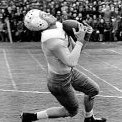
14 pointsNot sure if that particular photo had been "recreated" before, but I needed the practice anyway:14 points
-
12 points12 points12 points11 pointsAnd I'd prefer that the Koch brothers man up and take personal responsibility for the cancer that benzene emissions from their chemical plants create, but we also know that ain't gonna happen so we're stuck in this situation where government policy is to subsidize shit food, food companies spend billions on advertising and research to trigger as many addictive pleasure centers in the brain as possible, at least 40% of stuff in the grocery store that is called food but doesn't meet the definition, most people do what everything in society is screaming at them to do, and we end up obese and unhealthy and you sit here and preach about personal responsibility with your calvinistic bullshit and society at large has to pay for the effects of an unhealthy population (including benzene cancer and Cheeto heart disease) in the least efficient way possible.11 points11 points11 pointsThat’s why I recommend Old Glory Caravan Insurance. For when the brown ones come for you. And they will.11 points10 pointsDude, it's simple. Obama and the Dems did zilch to protect our borders, and Trump has done a bunch of tough things that have made our border strong. Also, if you don't like those tough things that Trump has done, you are a hypocrite because Obama did all of the same things before.10 points10 points10 points10 points9 months yesterday on this second go round and its flying by. I'm not fighting anything this time. Surrender has been everything. I kew my life was unmanageable and came to believe in a power greater than myself the first time so I could get well, stay alive, and not have people mad at me. This time has truly been a psychic and spiritual change. I just had to let go of who I thought I wanted to be without alcohol, and be who my higher power has in store for me. I have no clue what that is yet, but who I am becoming is pretty fucking great. I hate that I had to go through crazy again to get here, but I guess that was just in the cards. Grateful.10 points9 points9 points9 pointsUAB is 6-1 and is now RV in the AP. Their games before aggy are: at UTEP (0-7), UTSA (3-5), SOUTHERN MISS (3-3). They could easily be 9-1 and in the top 25 before the aggy game. aggy is 5-2 and #16 in the AP. Their games before UAB: at Mississippi State (4-3), at Auburn (5-3), OLE MISS (5-3). They could easily fall out of the rankings losing 2 out of the 3 (6-4). A ranked UAB "cupcake" beating a downward roller coaster unranked aggy team at home, right before the LSU game, would be fucking glorious.9 points9 pointsWhen one of our favorite ATH types comes off the board this afternoon for the good guys, please keep the “how many WRs do we take then?!” or “I guess we’re out on Washington/Higgins/Lewis/McCoy” histrionics to a minimum. Or, I guess if we’re questing for 1,000, fuck it, gnash the teeth. Either way, cheers.9 pointsNon-degenerate gambler scenario- don't lay money on games your team is involved in9 pointsThis news sucks. I was looking forward to his efforts in creating a toxic culture in that locker room.8 points8 pointsTo be fair, pregnancy can cause some violent mood swings and irrational tantrums. It's the hormones.8 points8 pointsThat one will always have a special place in heart as one of my favorite games because it was played the day after my son was born. He and I watched it together on the TV in my wife's hospital room, so it was our first Horns' game together. I mean, he mostly slept while I held him, but he's still a fan today. He says he wants to go to UT like his parents. It was really nice that his first game was a complete ass beating, with Brian Orakpo nearly killing Carpenter on the field and the chants of "Ruuuuuuuuddyyy." Even Chris Jessie's dumb ass couldn't mess it up for us.8 points8 points8 points8 points8 points7 pointsI know this is going back too far, but I think it’s kind of insulting to not mention Glen Halsell & Billy Dale of the 69 NC team. Also, little Joe Bob Bizell from the mid 70’s, so we have had some nice contributions from Permian.7 points7 points7 points7 points7 points7 pointsSo as to the upcoming game, the key to this week is "explosives". OSU's path to victory is hit a bunch of big plays. Their offense is Top 10 in generating explosive plays this year....our defense has struggled preventing them. So get out your Greg Davis explosives counter and track both sides. If there is a significant difference in explosive plays in favor of OSU, they will win....it is probably that simple. Worth mentioning again that the only 2 teams that have scored more than 21 points against Texas are also in the Top 10 in explosiveness this year. I'd expect Gundy and Co to throw the kitchen sink at Texas in the first quarter-trickeration, misdirection, etc. to get some quick points. They'll look to try to jump Texas the way Maryland did. If OSU is in the 20's in terms of points by halftime, they should be feeling good. OSU will not be able to generate long sustained drives against this defense given Texas' propensity to stop those kinds of drives plus OSU's penalty and turnover issues this year. They are also below average on 3rd and long and have given up lots of sacks and pressure. This is a team that needs to hit big plays and get good field position. Don't be surprised if OSU hits 30 or more this game. The matchups favor that unless turnovers play a big factor. And they could because OSU is -3 for the year and Cornelius has already tossed 8 INT's. On offense, Texas will have to be somewhat different out of necessity this game. Even if Ehlinger starts (which we may not know until gametime), he will likely be on a pitch count in terms of QB runs and Texas will probably only use that in key situations (short yardage, goaline, etc.). That means Texas has to change how it sets up the run. Unfortunately, not sure there is any Sam Wyche 2 back offense (think Ickey Woods/James Brooks for the old timers out there) in the playbook so generating run opportunities will be tougher as was seen in the Baylor game with Shane. The QB's should be drilled this week on counting the box and if it is a running play into a stacked box, check to a WR screen and vice versa. Texas had success with that against BU late and think it should be a key component of the "run game" this week. OSU's run defense is average, but can't give them easy looks to defend (i.e run into an 8 man box). Alabama can do that-Texas can't(this year anyway). Gotta hope the downfield passing game is crisper this week now that Shane has had some reps with the ones. Can't afford to miss opportunities that should be available. OSU's defense has been generating sacks this year...it appears to be about the only thing the defense does well which is why 3rd and 10 isn't a winning play for Texas this week, despite the fact that Texas is actually in the Top quartile of 3rd and long conversion percentage this year. Texas needs to go into this game thinking 35 points + is what it will take to win. Special teams has a tilt to OSU on the strength of their kicking game. Their kicker is a proven junior who has only missed one attempt this year. Texas' kicker is an emerging freshman that has already missed 5 attempts. Their punting has also been better- Zach Sinor is a veteran who has been netting almost 5 yards more per punt than Bujcevski. At least Buj is coming off his best game as a punter and it was the first week that a bad punt did not lead to opponent points. Neither team has a return game to shout about, but Texas has generated a couple of big punt returns this year. Expect a tight game (surprise). I'll buck S&P and say Texas wins (and covers the - 3 spread), but it will be a 4th quarter game. Texas at least knows how to play these types of games this season. Now back to reliving 2015 and determining OSU's place amongst the serfs of the Big 12 who must pay homage to the royalty that is Texas.7 points7 pointsDefinitely ISIS. And they are coming specifically for you, you scared little bitch.7 points7 pointsGet over yourself. "Being a dick" is kind of one of the the organizing principles of Shaggy/Surly. Yeah, it's a Texas board in origin, but there are tons of fans from other Big 12 schools and all over who have been regular posters here for quite some time. So pulling the whole, "know your place" shit kind of rings hollow on this particular board at this particular time. That sounds like something I would have read on a Rivals message board in 2003.7 points7 pointsI saw Beto speak yesterday at the Mendenhall Community Center in Houston. 250 or so fervent supporters plus curiosity seekers and exiting EVs like me in attendance. The Betophiles seemed as if they were waiting on The Beatles to show up and when he did actually walk across the street to meet the crowd they really did go into a frenzy. I listened to his stump speech and he's good at what he does. I'm not a Beto guy. I do, however, appreciate his attitude and style and it is great to see our system of campaigning on display. People hate on our system quite a bit and there are many flaws; but to see a candidate in public and on the pavement at a non-descript voting location was a great reminder that we are blessed to live in a great country where anything is possible7 points7 pointsAren't we supposed to forgive those who trespass against us?6 points6 points6 points6 points6 points6 points6 points6 points6 points6 pointsI’d rather boil my balls 5 times than live in Houston6 points6 pointsvoted on my way home from work. only had to wait about 20 minutes. voted against every republican on the ballot and in races where they were unopposed, i left it blank. fuck them for what they've done the past several years. hope this is a bloodbath.6 points5 points5 points5 points5 pointsHold the fuck up, did you just post something where it shows you clicked on a link that was in Texags?5 points5 pointsWill that stop football board goobers coming over and complaining about "WE NEED BEEF FOOTBALL STARTS ON THE LINES NO EXCUSES"? Probably not.5 points5 points5 pointsAt least Germany was coming off heavy losses in WW1 leading to a couple decades worth of hardships leading to the need to believe in a snake oil salesman. The US has been the most prosperous and wealthy country globally for decades and Americans just turned their country over to a snake oil salesmen simply because they're spoiled and bored.5 points5 pointsBeto campaign GOTV numbers, weekend wrap-up edition. 580,339 doors knocked on as of Monday morning. Over 100k knocked on yesterday alone. FYI, those are total knocks. In my experience, 50 to 70% aren't home or refuse. In most of those cases flyers are dropped off at the door. So that's at least 175,000 actual conversations held and up to 400,000 flyers handed out. We should be at 800k by next weekend and over 1 million after next weekend. My guess is that 1.8 million total doors knocked will be the final number by 11/5, well short of the 4.4M goal but an unprecedented effort in the state of Texas regardless.5 points5 pointsGrandy and Angilau were thought to contribute right away. Moore and Jones were always going to be projects. Ghirmai we wanted to redshirt but looked like he might have to play early, especially after Grandy retired. Removing DBs/WRs (since those positions seem to allow for early playing time more than those closer to the ball) and P/Ks from the equation (redshirting kickers is pretty unnecessary) the fact that we’ve only played 2 other true freshmen (Ossai and Ingram) from the QB, OL, RB, TE, DL, or LB is pretty amazing from where we were just a year ago especially when you consider that Okafor may be getting a redshirt this year too (only played in 1 game so far) and that’s with losing 2 starters on the OL (1 to the NFL) and a DT and LB to the NFL as well.5 points5 pointsThey can wander for about 3 decades, for all I care. Ohio State has the single greatest run of coaches in the history of CFB. Outside of one year with Luke Fickell, I'm pretty sure the other 5 guys from Hayes forward all have a winning percentage above .750. OSU fans will bitch to you about Earl Bruce or John Cooper, and neither guy won it all, but they fucking won a ton. They never had a truly hideous run of performance the way all other powers have had since 1960. -Texas from '84-97, 2010-2017 -OU in the 90's -USC in the 80's and 90's -Michigan for a decade in the 2000s -Bama for more or less 15 years from 1992-2007 -LSU for most of that period until 2001 -Miami from 2005-now -Notre Dame from 1998-2010 -Tennessee from the mid-2000's to now -UF for most of their history but for the 90's and 2006-2009 I mean, you can argue that FSU has had it as good from 1980 forward, but that's about it. These motherfuckers have zero idea what it feels like to view your program as truly lost from relevance without a return to it in sight. I hope Meyer quits and they fuck the hires up for the next 20 years.5 pointsThis leaderboard is set to Chicago/GMT-06:00Football ... Basketball ... Baseball ... Other Sports ... Futbol ... 🤫995🤫 ... Gambling ... Movies & TV ... Music ... Hobbies ... Lulz ... Food & Travel ... Daily Texan ... Business & Markets ... Cloak Room ... Help ... For Sale ... Board Discussion ... Advertise... Tailgate Donations
Account
Search
Configure browser push notifications
Chrome (Android)
- Tap the lock icon next to the address bar.
- Tap Permissions → Notifications.
- Adjust your preference.
Chrome (Desktop)
- Click the padlock icon in the address bar.
- Select Site settings.
- Find Notifications and adjust your preference.
Safari (iOS 16.4+)
- Ensure the site is installed via Add to Home Screen.
- Open Settings App → Notifications.
- Find your app name and adjust your preference.
Safari (macOS)
- Go to Safari → Preferences.
- Click the Websites tab.
- Select Notifications in the sidebar.
- Find this website and adjust your preference.
Edge (Android)
- Tap the lock icon next to the address bar.
- Tap Permissions.
- Find Notifications and adjust your preference.
Edge (Desktop)
- Click the padlock icon in the address bar.
- Click Permissions for this site.
- Find Notifications and adjust your preference.
Firefox (Android)
- Go to Settings → Site permissions.
- Tap Notifications.
- Find this site in the list and adjust your preference.
Firefox (Desktop)
- Open Firefox Settings.
- Search for Notifications.
- Find this site in the list and adjust your preference.















.thumb.jpg.445b4ccc823cbf17f1044bb6c1dbc197.jpg)