Leaderboard
-
Cheeseweasel
Legacy Members71Points25775Posts -
texifornia
Certifiably Surly68Points41989Posts -
Ricky's one-hitter
Certifiably Surly53Points5632Posts -

BabaYaga
Legacy Members48Points16935Posts




Popular Content
Showing content with the highest reputation on 08/07/20 in all areas
-
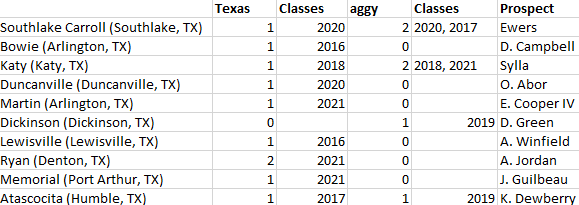
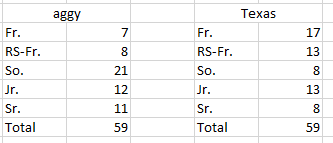
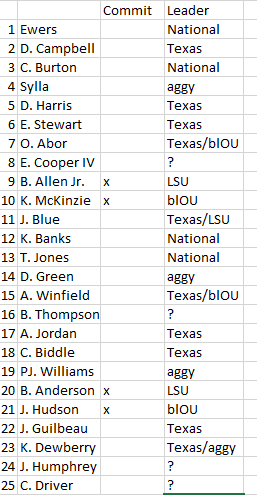
It's still early, but this is a great example of how deep Texas is in 2022. In 2021, Jalen Milroe is ranked 82nd and is #10 in-state. This is why aggy is absolutely fucked in '22. None of these kids will have friends on the team, engaged hs coaches, or familiarity with the aggy staff because they haven't been hanging around their school recruiting the classes ahead of them. These are the respective high schools of Texas kids in the top 150 (composite) nationally along with how many current roster and committed players (no walk-ons) also went there. aggy has the expected advantage at Katy, although it's only their kicker, Small and DITR 2021 TE, Fernando Garza that make up those 2. They also have an advantage at Dickinson. They have an unexpected advantage at Carroll, though that's irrelevant to the prospect there. More data: Unique Texas high schools on each roster, excluding walk-ons (ie high schools where staff has effectively recruited): Texas - 59, aggy - 59 Roster distribution of unique high schools Now that's the stuff. And, unfortunately for aggy, the above isn't a result of misses. It's a result of not recruiting in-state. So, in a deep 2022, how likely is it that aggy can generate momentum in-state? And who could they purchase in an attempt to recruit for them? Is there a Demetrious Davis in 2022? It's already apparent that Bobby Taylor is a whiny bitch, so it won't be him. Sylla is quiet, won't be him. They're chasing an oos QB, won't be him (they've offered 9 QBs for '22, only Ewers is in Texas and he ain't going there). In fact, of 147 offers in '22, only 38 of them are for Texas players. 5 are committed elsewhere, and most of the rest is just star-chasing the top of the in-state class. Texas is in a good position early in '22. We were in a similar position before we shit the bed last season, but did not have the benefit of another year of aggy fucking around oos behind us. If you look at the top 25, we're the perceived leader or co-leader for 10, with significant traction in some of the national battles like Ewers, Burton, and Tavorus Jones. aggy has a lead or is at least in the conversation for Dickinson, Katy, Atascocita, and Summer Creek kids. Sound familiar? That's the Houston suburb group that will bang aggy's door down to look at their prospects. Any proactive in-state efforts result in a lean? Nope. So who are we really recruiting against for Texas prospects this cycle? Chokelahoma, LSU, fOSU, (perpetually) Alabama, and that's about it.
 22 points
 -
16 pointsShut the fuck up dude. Get off your shine box, a 3rd party candidate isn't in it this election. If you want to waste your fucking vote on Mickey mouse or whoever the fuck it's up to you, but don't tell people they are stupid for voting against Trump in a Joe Biden candidacy. Joe Biden fucking sucks and is a shitty candidate, but he's not a fucking morally bankrupt piece of shit who lies every other word.16 points
-
13 points
-
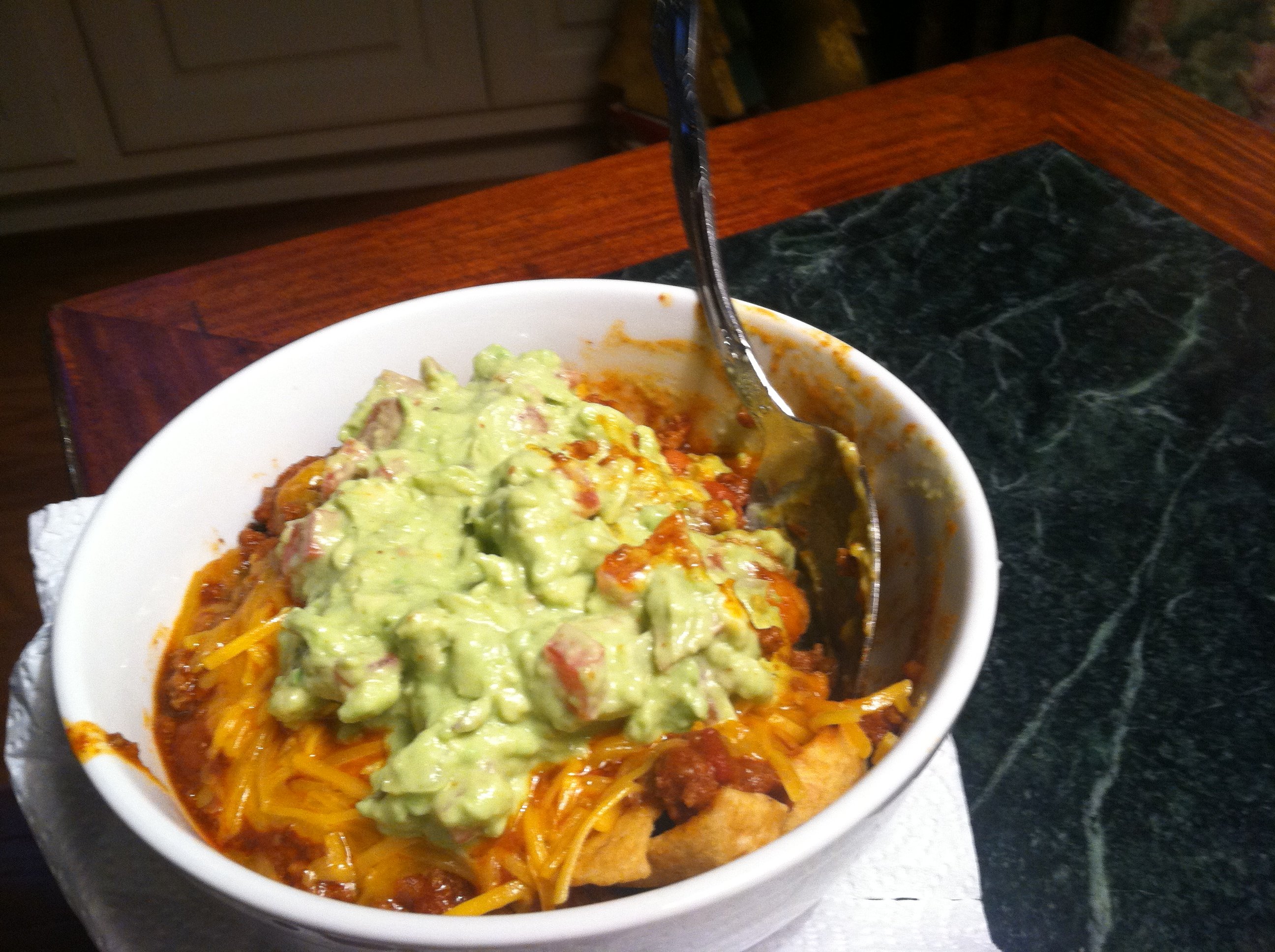
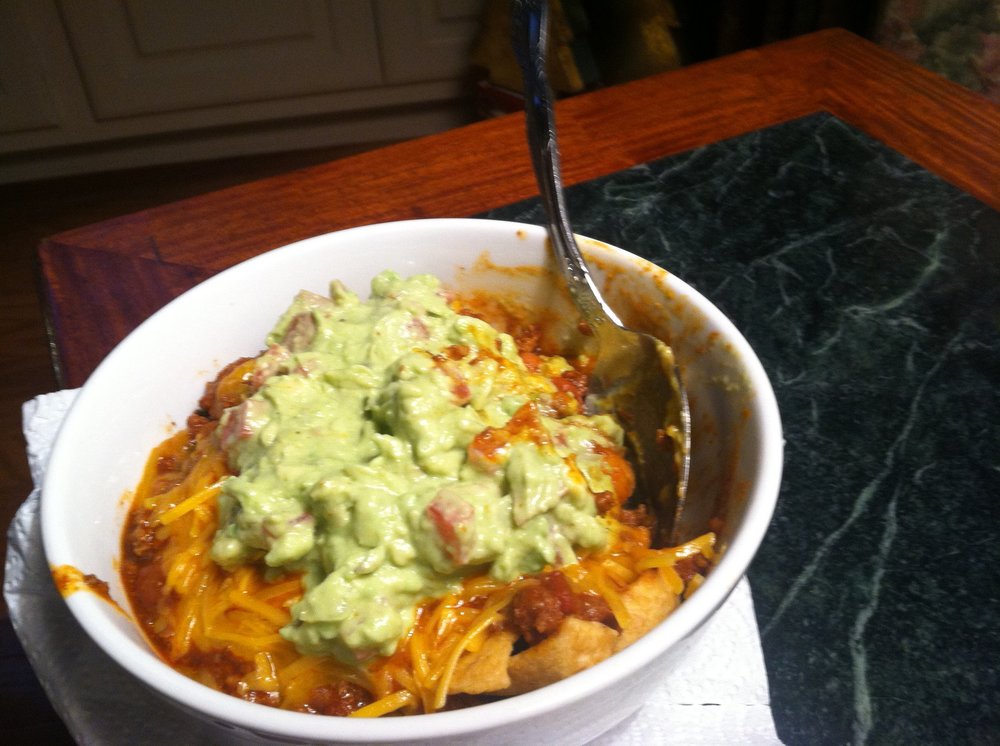
13 points13 points12 points12 pointsThe Communist system had little, if anything, to do with defeating the Axis Powers on the Eastern Front. The Germans (and their vassal allies like Romania, Italy, Finland, and Hungary) were defeated by the overwhelming weight of numbers and the massive land-mass of the Soviet Union, not some inherent advantage that the Communist system provided to the Soviets. In fact, the brutality of Communist system was one of the primary reasons why Germany had so much success during the first few months of Barbarossa. Stalin, being a good Communist, had purged hundreds of thousands of his officers in the months and years leading up to June 1941. As a result, the Soviet Army was practically leaderless when the Germans invaded. While the Soviet troops on the ground, in many cases, fought valiantly in the summer and fall of 1941, entire Soviet field armies (including as many as 700,000 men in the Kiev pocket) were surrounded and obliterated due to incompetent leadership. Germany was stopped short of capturing Moscow in 1941 because, simply put, the German Army was exhausted, not because of the Soviet system. Some German divisions were operating at battalion strength; they had no winter clothes; and they had conquered an area of land in Ukraine, Belarus, the Baltic States, and western Russia that was twice as large as the entirety of France. The Soviets didn't have a superior system than the Germans, they had an endless supply of men, land, and winter to keep throwing at the Germans. Capitalism, on the other hand, played a crucial role in winning World War II. American Capitalism, through the Lend/Lease Act, quite literally fed the Soviet Union from 1942 to 1945. During World War II, the United States supplied to the USSR the 2020 equivalent of more than $100 billion in food and equipment. The Soviet Army would have had to walk to Berlin, not ride, if not for the 400,000+ trucks and 2,000 locomotives the US provided. The US also supplied the Soviets with some 12,000 aircraft, 13,000 tanks and armored vehicles, nearly 5 million tons of food, and nearly 3 million tons of petroleum products. 60% of all aviation fuel used by the Soviet Air Force during the war was supplied by the United States. Soviet blood was essential in defeating Nazi Germany; but America's industrial base was every bit as important. Bad Teammate's assessment also completely ignores the War in the Pacific. American Capitalism was the only economic system that could have allowed for the massive logistical effort necessary to transport millions of men and millions of tons of material across the vast Pacific Ocean. By the end of the War, the U.S. Navy had nearly 1,200 capital warships, including 27 fleet carriers, more than 100 escort carriers, and 18 battleships - more than 70% of the entire world's total tonnage of naval vessels. The U.S. military was able to hop from island to island in the Pacific, from Guadalcanal, to Tarawa, to Cape Gloucester, to Saipan, to Guam, to Tinian, to Peleliu, to Iwo Jima, and finally to Okinawa, while simultaneously deploying armies to New Guinea and the Philippines, winning the Battle of Atlantic, and conducting landings in North Africa, Sicily, Italy, Normandy, and Southern France, because our economic system permitted the construction of such a massive navy. Finally, his assessment ignores that the resource allocations among the United States and the USSR were intentional. The U.S. could have built an Army much larger than 91 divisions (plus 6 Marine divisions), but by design, the U.S. committed millions more men to: 1. Industry on the Home Front; 2. Agriculture on the Home Front; 3. Building a massive Navy to fight a world war on two fronts; and 4. Building a massive strategic bomber force that obliterated Germany's industries and cities. The U.S. could have taken the millions of men in its Navy, Merchant Marine, Army Air Corps, and Industry and put them in front line infantry and armored divisions. But the better resource allocation was to turn America into the Arsenal of Democracy, such that it could supply enough men to keep the pressure on the Germans in the West and defeat the Japanese in the East (and LOL at the hapless Italians), while simultaneously supplying enough raw material, equipment, and supplies to the Soviets to keep them in the War while they were battering the Soviets on the Eastern Front. Google "the 90-Division Gamble" for more. In short, the political and economic systems of the United States allowed it to fight on numerous fronts across the entire globe: the South Pacific, the Central Pacific, Alaska, the China/Burma Theater, the Philippines, North Africa, Italy, Southern France, Western France, and the Atlantic. The Soviet's political and economic system could never have done that. World War II was not about the triumph of Communism or Socialism, it was about the triumph of American Capitalism.12 points12 pointsThe biggest things King has going for him in College Station right now: 1. He's white 2. He has not made any comments about the Sully statute 3. He has not taken a single snap in college yet12 points11 pointsIf a patient presents to their cardiologist with significant blockage in 4 arteries, they are likely to be immediately taken to the operating room. The doctor doesn't say "well, what you need to do is improve your diet, get off your fat ass, and take these statin drugs and then we'll talk about surgery down the road" when it is likely that the patient will die in the near term. Joe Biden is bypass surgery. It carries all kinds of risks and negative consequences, too, but sometimes that's the only choice.11 points11 points11 points11 pointsGood news from the Xian family front. FiL is doing much better after receiving some new antiviral drug and is finally off a respirator! He can now breath with just good ol’ O2 treatment! thanks for all the well wishes.11 points10 pointsKetron would be cool, but come the fuck on down Jaden Alexis, your table has been waiting for months.10 pointsI like how Looch says the vols didn't beat anybody worth talking about last year like aggy actually did.9 points9 pointsWell, you see some of us have this cool ability to fucking hate both of them, as they are equally abhorrent and responsible for untold millions upon millions of deaths.8 points8 points8 points8 pointsWhite Zombie's worst song.8 points8 points8 points8 pointsA co worker walked into the office the morning and said he needed help and will be leaving this afternoon for a 30 day rehab. I am super proud of him. I knew the guy had an issue when he drank 6 beers in 25 minutes at the river one day. I got him into working out for a few weeks and I would pick him up every morning and he would smell like beer. He had been real distant to everyone this year at work and I could tell something has been bothering him. His boss is a good friend to me and called me to tell me and was pissed about missing work but thanks to this thread I was able to let his boss know how brave this is and it should be celebrated. Surly is good for something after all!8 points7 pointsActually, it’s among the dumbest things I’ve ever read. Here or anywhere else. The cumulative nature of things - votes, floodwaters, straw on camel’s backs - is a real thing. No individual raindrop flooded anyone’s house, ever. Yet if you yelled at and insisted to each of the trillions of raindrops that created the flood that they were meaningless, the flood wave that they cumulatively and collectively formed would wash you away, laughing the whole time. Jesus Christ, seriously, I can’t even figure out how to reason with the stupidity of a statement that “one of something in a system that accumulates that something is meaningless.” The truth is that EACH AND EVERY of those somethings has meaning, because they accumulate. And in every election, there is a single vote that is the vote that puts the winning candidate 1 vote ahead of the opponent....because it comes right after the accumulated votes that put them in a tie. God, I’m dumber for even engaging in this idiocy. What an absolutely moronic fucking tangent.7 pointsJesus fucking Christ. The amount of mental gymnastics a couple of posters will go through to make themselves feel bright and woke is ridiculous. You hit “reply” on your post and sit back and think you did this But you really did this Give it a fucking rest.7 pointsFuck you, hard. This is complete and utter bullshit.7 points7 points7 points7 points7 points(Eric Nahlin) Humidor: Camp begins! More commitments coming? Improving recruiting relationships.7 points7 pointsI have been known to, upon occasion, drop a healthy dose of guacamole slap in the middle of a bowl of chili frito pie. Slams.
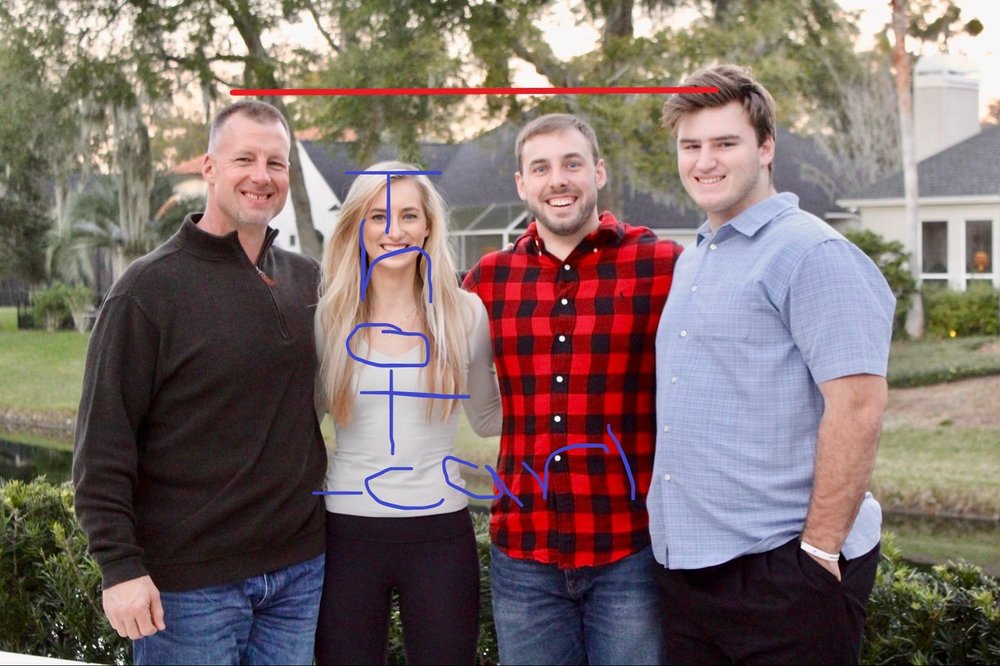
 7 points7 pointsSo the sexual assaulter who paid a porn star to lie about an affair they had just after his third wife gave birth to his fifth child thinks the devout Catholic man who raised his kids when his wife and child died in a tragic car accident is "hurting God."7 points6 points6 pointsI’ve lived in a country next to Thailand for the past 5 years. Travelled to Thailand many times. Sailed in Thai waters for a week. I live 1/2 a block from a great Thai restaurant run by a family from Phuket. I’ve met and worked with many Thai people. Not once has it been pronounced Thigh... Trump and his followers will lie about anything. It is a sickness.6 points6 points6 pointsCan you please use the title "Thank God for the Communists, WWII Thread of Domination"6 points6 pointsTime to sharpen the "getting an exact height measurement from an internet photo skills" Tom Myslinski was listed at 6'3 when he played for the Jags per Pro Football Reference and Wikipedia. Mike is slightly closer to the camera and has a shitload of hair, but using some highly advanced technology, I've enhanced the photo to show that Mike is clearly at least 6'4, and therefore all concerns about his frame and potential weight are entirely unfounded. That'll be $9.95.
 6 points6 pointsA Communist trying to take the high ground against Nazis. The irony certainly is amusing.5 points5 pointsNot voting or voting 3rd party is being neutral after seeing 4 years of Trump’s presidency and being confronted with the possibility of another 4 years. Being neutral in that situation makes you a shitty person.5 pointssigh. jesus christ. speaking of irony. and none of you fuckers even corrected this shit. he's a dumbfuck okie. the rest of you do not have this excuse. i hate to get between this 5th grade debate on the topic of who is the mostest evilest but i think part of the issue at play here is the separation of the concept of communism - an political economic system of beliefs from some of history's most notorious rulers of countries with communist (or at least highly socialist) systems in place. the vileness of stalin, mao, pol pot...these things are not debatable. however, the irony of associating someone who believes in communism as a preferred, more egalitarian political economic system with the despotic nature of stalin while also posting memes like "everyone i disagree with is hitler" is actual...you know, irony. there are hundreds of countries even today who have communist parties who are participants in their governments - largely non-ruling members of legislative or parliamentary wings of government. pcf in france, dkp in germany, cpc in canada, the pce in spain. their economic beliefs do not necessarily make them akin to stalin. stalin was a piece of shit, period...but that's who he was as a ruler. that does not preclude that something positive could possibly emanate from the ussr despite its gross atrocities checkering its existence. being a nazi is defined as a subscriber to the ideology practiced by the nazi party of germany which inherently incorporates facism and a rejection of liberal democracies and parliamentarian systems, as well as extreme racism and antisemitism. thus, a nazi = necessarily a really bad person. a communist = not necessarily a really bad person even though there were some bad people that were "communists."5 points5 pointsWould you also say "Everyone should be fighting socialists?" We don't "fight" people for their views in America (as fucked up as the Nazi's may be). We are a nation of laws.If they break the law, they should be arrested and prosecuted.5 points5 points5 points5 pointsIt's the #1 ranked academic Mormon institution and in the overall top #3 in Utah.5 points5 pointsSmitty can't help himself. His true cunt colors always come through. Shame he spent all summer convincing you all that ah... he isn't that bad. Yeah. He is. He's an insufferable little cunt. Fuck him and fuck byu forever. Can't wait until this name gets banned and he comes back as someone else.5 points5 pointsFor anyone not following the AISD thread in DT, Canvas is a flagship product developed and sold by Instructure (hq: SLC) https://www.instructure.com/canvas/ I have a grapevine line to a dozen-odd implementations and none of them have experienced "lockout" or "denial of service" come exam time. The system has it's issues like all software. I asked around tonight, and the 2 answers i got back were the same. "Sounds like aggy didn't pay their bill."5 points5 points5 points5 pointsI can’t call it my finest work but I’m quite proud of the composition. Sent from my iPhone using Tapatalk5 points5 points5 pointsFor fuck's sake, those guys were already on their staffs (Riley and Day). The incumbents "retired"; they weren't fired. At that point, those coaches were much less of an unknown than hiring a proven head coach from a different program for those ADs. If Meyer retired in 2014, there's a damn good chance that Herman is OSU's head coach. Both of those situations speak more to athletic departments having their shit together being better than a dumpster fire. Really? Helluva take there. We should just do that. Do you also recommend we run the touchdown play?5 points5 pointsThis leaderboard is set to Chicago/GMT-06:00Football ... Basketball ... Baseball ... Other Sports ... Futbol ... 🤫995🤫 ... Gambling ... Movies & TV ... Music ... Hobbies ... Lulz ... Food & Travel ... Daily Texan ... Business & Markets ... Cloak Room ... Help ... For Sale ... Board Discussion ... Advertise... Tailgate Donations
Account
Search
Configure browser push notifications
Chrome (Android)
- Tap the lock icon next to the address bar.
- Tap Permissions → Notifications.
- Adjust your preference.
Chrome (Desktop)
- Click the padlock icon in the address bar.
- Select Site settings.
- Find Notifications and adjust your preference.
Safari (iOS 16.4+)
- Ensure the site is installed via Add to Home Screen.
- Open Settings App → Notifications.
- Find your app name and adjust your preference.
Safari (macOS)
- Go to Safari → Preferences.
- Click the Websites tab.
- Select Notifications in the sidebar.
- Find this website and adjust your preference.
Edge (Android)
- Tap the lock icon next to the address bar.
- Tap Permissions.
- Find Notifications and adjust your preference.
Edge (Desktop)
- Click the padlock icon in the address bar.
- Click Permissions for this site.
- Find Notifications and adjust your preference.
Firefox (Android)
- Go to Settings → Site permissions.
- Tap Notifications.
- Find this site in the list and adjust your preference.
Firefox (Desktop)
- Open Firefox Settings.
- Search for Notifications.
- Find this site in the list and adjust your preference.