Leaderboard
-
mooseoutfront
Full Members149Points730Posts -

Brisketexan
Legacy Members105Points56128Posts -

JesusSweatDuck
Certifiably Surly67Points8154Posts -

Doc Reeves
Certifiably Surly60Points6650Posts




Popular Content
Showing content with the highest reputation on 02/08/22 in all areas
-
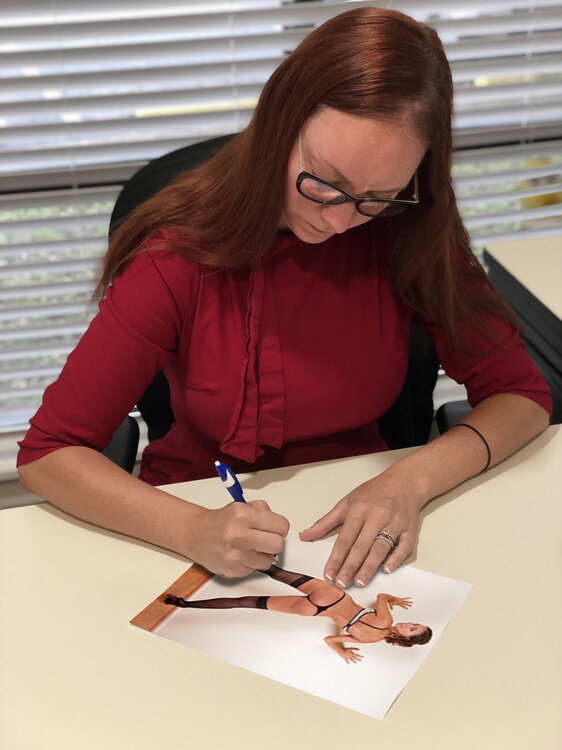
Autographed, too?
 29 points
 -
28 points
-
Umm. A celebrity hawking Jiffy Lube or Batteries is one thing. A celebrity saying a candle smells like her lady parts isn't bad actually. Weird, but not harmful. A C-lister hawking 'auto-warranty is a bit sleazy and damaging to people. A person spreading health care misinformation during a pandemic where nearly 1 million people within the US, have died is quite a bit different. I mean I stole a hello kitty keychain for my sister when I was 5 yrs old. Charlie Manson tried to start a race war and had people murdered, both are crimes. Enraged mob? You are projecting a bit. And enraged mob tried the murder the sitting Vice President of the United States for doing his job, and other Congressional people because the lost a vote. Sure when people saw that Hillary lost, some of them cried. I was sad. I knew Trump was a fucking disaster and would harm us, our reputation, and our allies while courting a fraudulent relationship. He is a conman that conned Hollywood with transparent actions. I was not enraged. I did not attempt to murder or heck even send strongly worded messages. I simply bided my time and voted the bastards out. Your tactic of conflating issues will not work. It never works on anyone with an above room temp IQ. It works on republicans, but not me. Not here. I knew who you all were for quite a while. You said who you were with your tactics, gerrymandering, whistles, voter suppression and outright denial of the truth. You demonized people just for being of a different gender. You said they were the 'most liberal' person ever each and every time. You purposely confuse socialism, communism, fascism with liberals and most of your followers are too stupid to understand. No one is cancelling Joe Rogan. That is between Spotify. People are calling him out for his past transgressions and holding him accountable. You confuse 'cancelling' with consequences. You tried to cancel the Dixie Chicks you boycotted them because they believed differently than you did about our country. Those people calling out Joe Rogan and making his past public are just trying to demonstrate their belief he is a dangerous asshole. He has more influence than Natalie Maines. He is not sharing a belief that is based on reality and his personal knowledge. He is spreading harmful disproven bullshit which in turn harms society. Rush Limbaugh was the same kind of actor. Spreading lies, a dealer of hate and racism. He was a horrible person who profited from the damage to discourse. I mean your side is now promoting a violent terrorist attempt to overthrow the government as discourse. Your side proudly displays nazi flags and flags and the traitors of the confederacy. When you look around and find that your allies are all shitheads, and your leaders admire warlords who murder with impunity than maybe you should reconsider where you are. I live in a nation where most people want a peaceful society. Your kind want your way or anarchy until you get your way. Don't you like it when I conflate?27 points
-
26 points
-
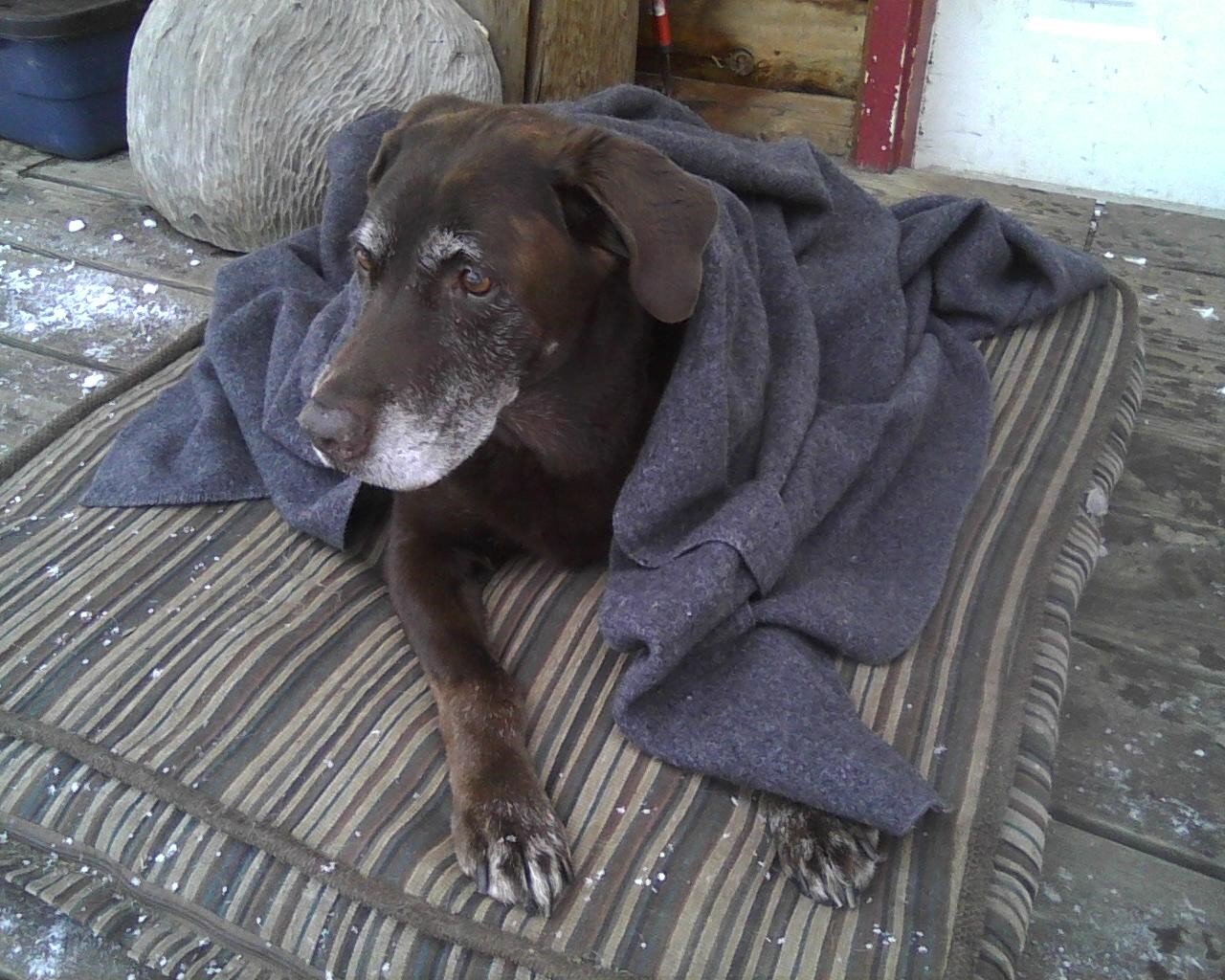
25 points25 points24 points23 pointsFunny story from tonight. My brother and I were at the game and were standing at appropriate moments (not like we were standing 100% of the time). Texas is going on a run in the 1st half and we're standing and cheering. The guy behind me yells, "Hey can you sit down." I turn around and look at him like he's regarded and say no. He then begins to heckle us for about 5 minutes and we remain standing. They then leave I guess to find different seats. These were Kansas fans so fuck 'em, but I wouldn't have sat down for UT fans either.23 pointsFor perspective on what the hell is going on here, on 9.95, a poster named Theo asked about the relevance of David Cutcliffe. When the gang (somewhat rudely.. it’s Surly and the Recruiting Board) pointed out he had a long relationship with the Mannings and recent success developing QBs (Daniel Jones), Young Theo then admitted he had no fucking idea who David Cutcliffe was. That received the response you’d assume, with CTJ batting him around like a shuttlecock Theo then got extra defensive and started calling everyone old (gasp) and proceeded to get crowd sourced in a matter of hours. This thread was his resurrection, which has been moved here.21 pointsNot if you include football.21 points20 points20 pointsGot home last night to find the wife intently studying her Ipad. I don't pay much attention for the first 20-30 minutes, but then I have to ask... "Honey, what are you studying over there?" Wife: "I shopping for mini horses." Me: "Oh...wait, what the fuck did you just say?" Wife: "I really want a horse, but I know we don't really have the space for one, so I am looking at mini horses." Me: "Uh, you realize we live in a gated subdivision in the middle of fucking Tampa, Florida don't you." Wife: "Yes, I understand that, but we are allowed to have small animals...that is why the horse in miniature."20 points19 pointsWhen we moved here we brought my wife's 2 cats and our chocolate lab with us. They have moved to the great beyond. We have a lab mutt named Magnum with us now. Like George Carlin said, "Life is a series of dogs." I couldn't imagine living without a dog, especially out here. They are my alarm system and my protection. Magnum is a rescue dog from Texas that my wife brought back with her after I put Jolie down (still the hardest trigger I've ever pulled). He chased a black bear off the first week he was here. This place is a dog's paradise. He's fucking awesome. When we go for hikes he is on point, always within sight. If he does lose sight of us he backtracks until he sees us again. He takes his job very seriously.19 points19 pointsThe general perception in this morning’s big papers here is that Biden’s statement re NS2 was an attempt to pressure Scholz publicly and that Scholz’s continued refusal to even address it by name is a strong indicator that Germany, in fact, is not prepared to kill it outside of the most extreme example of "invasion". And this sentiment is further supported by the fact that yesterday Ukrainian President Zelensky abruptly cancelled his previously scheduled meeting with a few hours notice with German Foreign Minister Annalena Baerbock on the grounds that she would not commit to killing NS2 in case of an invasion. IMO, the Zelensky cancellation is even stronger proof that that the German government has not, in fact, agreed to kill it. This has brought intense scrutiny to the crumbling Ukrainian-German relationship, with Zelensky and the Ukrainian Foreign Minister getting special scorn in some corners of the establishment. IMO, we are treading dangerously close to a discussion that neither the US nor the German government wants to have publicly in Germany, specifically that of the sovereignty of Germany with respect to its own domestic issues such as energy supply. And while I personally understand the fact that this is by no means a purely domestic issue, it is nevertheless widely is seen to be that here. Political opponents on the right and left flanks of the centrist parties are already throwing around words like “colony”, “vassal” and “occupied”, which is, of course, silly, but which will gain traction in some degree if this is seen as the US asserting its own power to unilaterally kill a project that corporations, trade unions, and professional services providers alike all want to see come into place...and that the Germans spent billions to build. Generally speaking, overt US influence in Germany is not something that is desired, but it is something that will continue to be tolerated so long as it is not disruptive within domestic affairs, and a unilateral killing of NS2 will be seen as precisely that. Above the fold this AM, the Frankfurter Allgemeine Zeitung addressed this as a unilateral action by the US today, and not a joint position: On an anecdotal note, I am onsite at our corporate HQ for much of this week. As is the sacred practice of all employees in Germany, we took lunch yesterday precisely at noon at the company canteen, which is essentially the melting pot of all elements of a German company and is THE place where company gossip, politics, current events and news are discussed over inappropriately high-calorie lunches which tend to render the second half of the day fairly uncomfortable and unproductive. By pure happenstance I ended up sitting across from the head of the company’s Betriebsrat, which is essentially a government mandated “Workers Council”. This is effectively a minimum “independent” labor union that every company is required to have, even if the business itself hasn’t opted to become part of a larger Trade Union. And in companies that do have a unionized workforce, such as ours, the head of the Betriebsrat is typically a factory/laborer type employee with tight ties to the relevant industry trade union, which in our case is one of the big boys of the “Big 8” unions which make up the larger “German Trade Union Confederation”, which is the largest and most powerful union confederation in Europe. This forms the hard core of Olaf’s SPD electorate. The SPD IS trade unionism in Germany, and trade unionism IS the SPD. They are twins born from the same movement. Anyway, I have known him for a while, so we can speak relatively freely. Our conversation of course turned to the Russia situation and I honestly couldn’t determine who was more pro-NS2…our C-Suite or the foremen on our factory floor. And that is what is so sensitive here…we often talk about German Industry and I think it is inevitable - particularly in the US - that people associate “Industry” as big monied interests with interests in lower overhead and access to Russian markets who lean on bought-and-paid for politicians. However, in the case of energy supply, that is not strictly the case. Trade Unions like IG Metall and Ver.di, which are EXTREMELY powerful in Germany are pressuring Olaf and his SPD, medium-sized business owners (of which there are a TON in Germany) which are dependent on affordable energy for proper margins are pressuring the CDU and FDP. White collar workers and corporate execs are pressuring the CDU. Rank and file commies are pushing die Linke and the far-right is pushing the AfD. The only ones not getting any pressure from their base are the Greens, who are ultimately going to be dragged down into the dangerous single digits if energy supply gets squirrelly. And the media is pushing, of course, as they tend to have a larger degree of transatlantic tendencies due to the fact that they run in much more international, cosmopolitan circles. So what we are witnessing here is a president who is getting beaten up in the media for not being hard enough on Russia, while he is responsible to organized constituencies that have no desire to damage Germany’s own interests for Ukraine. With respect to the Macron coverage, which I agree totally with @956 Worldwide's take, the German coverage is definitely in line with what 956 identified as the French take. The German press has given Macron really strong support this morning and have definitely fallen on the side of “progress is being made with Putin and the path of Macron should be taken seriously”, which to some degree is a backhanded way of saying “the US is exaggerating the inevitability of war.” Here is a full translation of top story in die Welt, which is one of the major daily papers: To me, this really does feel like the French and Germans are working in concert and preparing to throw a ton of pressure on Ukraine to re-implement elements of Minsk 2. And we will probably get some sense of that over the next week, as Macron is set to meet with Zelensky today and Scholz will see him next week. It seems that they are trying to create an image of a “third way” between the Russians and the US. And I think it is important to point out that while we understandably talk about the French and Germans in this context, there are quite a few other EU member states who are quietly avoiding the slings and arrows while hiding behind the Germans. These would also prefer to protect their own national interests over having anything to do with Ukraine. I am thinking specifically about the Italians, the Austrians, the Hungarians, the Greeks, the Croats, the Slovenes, perhaps the Spanish. Point being that a French-German attempt to placate Russian demands is not going to be isolated to those two countries and I expect there to be a more public alignment between the Franco-German position in coming weeks if this continues to draw out. Which, of course, is a benefit to Putin as the cracks within the EU and NATO are definitely showing.19 points18 points16 points16 pointsI don't care myself and don't judge others that do it. However, the GOP wants to be the party of sexual degenerates while simultaneously pushing a traditional family agenda by stepping on the civil liberties of LGBTQ+ along with woman's rights. They can't be libertine in their personal lives while oppressing others for being outside "traditional family values". Fuck these people.15 points15 pointsHere's a video I took of the players celebrating with the students that rushed the court. It looks like they players were having a blast too15 points15 pointsI feel like one measly rep isn’t enough here to show my appreciation for Shady, 956 and a few others who legit rain down nuanced, local and applicable knowledge on the rest of us here. This is fascinating stuff and I hugely appreciate the time you guys take to write article-quality analysis, careful to separate what you know as fact from your personal anecdotes. On a side note it also helps me explain why this is my ‘home’ on the Internet despite me being a Poke, and needle my wife who thinks it’s all Dickbutt and football. InstaFaceTok has nothing on this place.15 points15 pointsWho had “not knowing who David Cutcliffe is” as the reason for the next ban?15 points14 pointsOr he just sees the data? Why does this have to be polling related? It looks like a reasonable take based upon existing data. I swear, some of you think that because someone supported mask mandates in May of 2020 or even November of 2021, that the person has to support them forever. It's just odd.14 points13 points12 points12 pointsYour approach is a perfect example of what's wrong with our present iteration of a "society." "If you think that this thing being disseminated broadly is poisonous, you should stop ingesting it." That's such a fucked up, limited and selfish approach. If poison is flowing through our water pipes, if my only reaction is "well, I guess I won't drink the water anymore" is half-assed. The reaction of a human being who lives in a society and community should ALSO react in a way that reflects concern that his neighbors are getting poison piped into their houses. We should be interested in reducing the harm to them, and to society as a whole, not just "every man for himself!" We should be focusing our attention on the source that's piping the poison into their homes along with ours. Giving a shit about how things affect the society and people around us is a fucking baseline of being a decent human being, and it's a baseline that as a society, we can't even get to. That's fucked up.12 pointsit’s been my experience when people use “100+” it means a shitload more than 100 Rules for life: 1. Try not to commit crimes 2. if you do, don’t tell anyone about the crimes you commit 3. don’t write down the crimes you commit 4. chew your food thoroughly12 points12 pointsI hear NATO is considering stationing 1,000 troops in the middle of the table.12 pointsI don't jerk off to thoughts. But I do jerk off to thots. Also, I'd suggest it's too early to be this drunk, but it is lump we're talking about....12 points11 points11 pointsI call people who spend 14 months posting false information on public websites about the safety of vaccines "antivax."11 points11 pointsthe court rushing was a real and spontaneous moment of pure excitement and joy within the fanbase. anyone who has a problem with it can fuck off.11 points11 pointswhat Quan doesn't understand is that this team needed that. These guys for the most part are mercenaries from other schools(many far away) and a lot of them are gone in a year. Its great that they can enjoy that with fellow students and feel being part of the student body. I think it helps everyone. Do I want to get to the point that storming the court against Kansas in basketball is stupid? yes but we aren't there yet.11 points11 points11 pointsWriting to you bunch of degenerates is a welcome coping mechanism used to distract myself from pointless meetings and those certain teleconferences about mundane shit I don't really care about. So, in fact, it is you who should be thanked...or blamed if I die in an industrial accident because I didn't pay attention to some corporate BS about emergency safety management this morning.11 points11 points11 points11 points11 pointsTeenaged me would be hauling white rocks around to the front doors of half the town.10 points10 pointsI do think it's funny that guys like 52-80 always assume we're lying when we clearly explain why something like Rogan pushing antivax shit pisses us off. He does this because he's full of shit 24/7, all of his friends are full of shit 24/7, and all of his heroes are full of shit 24/7, so he assumes everyone must be full of shit 24/7. The idea that we could actually mean what we say is a completely foreign concept to his crowd.10 pointsI’ll bet Fit Lump knows who David Cutcliffe is.10 pointsTexas beats Tennessee by one: @Bitterwhiteguy writes a lengthy article about how if Tennessee had hit the buzzer beater that Texas would have spiraled into a 1-7 finish to the season. Texas beats 19-3, 8-1 Kansas in an epic, back and forth, slugfest of a game: @Bitterwhiteguy take the win, pussy.10 points10 pointsCalling my shot - KU will not shoot that well in Lawrence. That is not sustainable (60-something % in the 2nd half), We will not shoot that poorly from deep again. We may win in Lawrence, we may not. But last year, we destroyed them in Lawrence (84-59) and barely won at home (75-72). We got our 3 point home win last night, so we are going to destroy them in Lawrence.10 points10 pointsI’m still basking in the glow. People can try to to downplay it, but this win was big. We didn’t play our best game. But every time it looked like Kansas was going to take over we battled back. The team showed heart, fight, guts, toughness, all that shit. They never gave up. The fans behaved like fanatics for the first time that I can remember. The atmosphere was incredible. I hope we can keep the momentum because it seems like this team might be figuring things out10 points10 pointsThe only time I've ever listened to him was basically under duress. I had an old friend and his lunatic wife who were basically begging me to watch the youtube clip of his podcast with Brett Weinstein. This was summer 2020, and Rogan's topic was CRT. She was somehow an early opponent of CRT, though the CRT she was railing against was far different than the definition of CRT now. Anyways, I finally gave in and watched a little bit of it, then had a nasty spat with them when I said, "So we have a guy who flunked out of college discussing how CRT is overtaking American colleges with a professor from Evergreen State University, which is literally the biggest fucking joke in higher education, and I'm supposed to learn something about my profession from this?" This was also my first data point in the theory that Trumpanzees are completely unable to discern credible, knowledgeable sources from pure unadulterated bullshit that appeals to them. And I told them that, and I don't think we've spoken since. And I don't miss them. Also, she nearly died of covid last fall because she's not vaxed.10 points9 pointsSweet view from my seats. Hook ‘em! Sent from my iPhone using Tapatalk9 pointsSome of us are dad’s in our 40’s, you fucking cunt.9 points9 pointsIf you are referring to aggy, the receptionist where I work has a son that went to eaTme for some reason. I try not to delve into the mindset of anyone who chooses to attend that shithole. She has embraced all things aggy. Not long ago I was wearing a Texas hoodie at work and she actually hissed at me as I walked by her desk. I stopped and told her to google 76-37-5. She was not amused. I told her they would always be little brother and she should just accept it and to stop it with their weird traditions around me. I've been talking shit to aggy my entire life and she would have nothing new to offer.9 pointsThis leaderboard is set to Chicago/GMT-06:00Football ... Basketball ... Baseball ... Other Sports ... Futbol ... 🤫995🤫 ... Gambling ... Movies & TV ... Music ... Hobbies ... Lulz ... Food & Travel ... Daily Texan ... Business & Markets ... Cloak Room ... Help ... For Sale ... Board Discussion ... Advertise... Tailgate Donations
Account
Search
Configure browser push notifications
Chrome (Android)
- Tap the lock icon next to the address bar.
- Tap Permissions → Notifications.
- Adjust your preference.
Chrome (Desktop)
- Click the padlock icon in the address bar.
- Select Site settings.
- Find Notifications and adjust your preference.
Safari (iOS 16.4+)
- Ensure the site is installed via Add to Home Screen.
- Open Settings App → Notifications.
- Find your app name and adjust your preference.
Safari (macOS)
- Go to Safari → Preferences.
- Click the Websites tab.
- Select Notifications in the sidebar.
- Find this website and adjust your preference.
Edge (Android)
- Tap the lock icon next to the address bar.
- Tap Permissions.
- Find Notifications and adjust your preference.
Edge (Desktop)
- Click the padlock icon in the address bar.
- Click Permissions for this site.
- Find Notifications and adjust your preference.
Firefox (Android)
- Go to Settings → Site permissions.
- Tap Notifications.
- Find this site in the list and adjust your preference.
Firefox (Desktop)
- Open Firefox Settings.
- Search for Notifications.
- Find this site in the list and adjust your preference.


_svg.thumb.png.82894d23b355e14e5d907b7f7b0f16ef.png)