Leaderboard
-
Js1
Certifiably Surly122Points78957Posts -

Longhorn_Fan68
New Members83Points22336Posts -
Captainant
Burnt Ends82Points19134Posts -

atomheartbevo
Certifiably Surly82Points63425Posts




Popular Content
Showing content with the highest reputation on 06/07/22 in all areas
-
27 pointsWe need to change Other Sports to Championship Sports.27 points
-
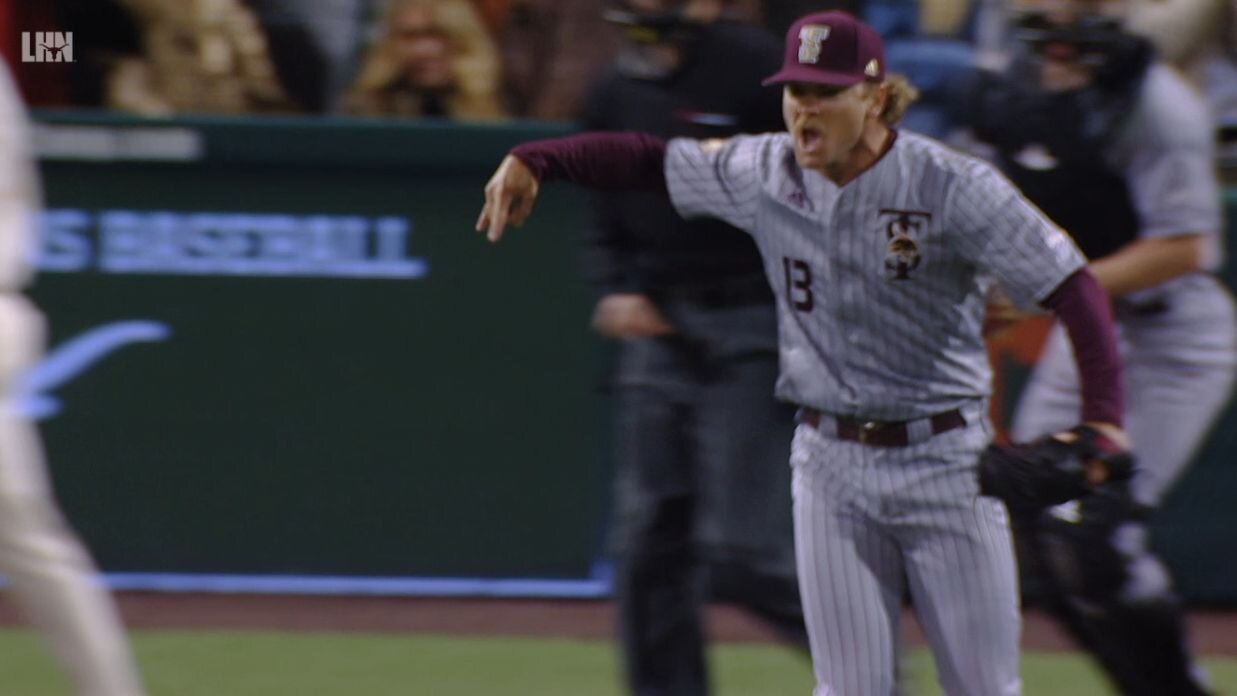
Jesus, i've been hearing about the stupid of this thread for a week or so now, and I stayed away for all the obvious reasons. But I have 15 minutes to kill, and figured I'd embrace my most masochistic tendencies, and it did not disappoint. Just start to finish galaxy brain bullshit by the obvious posters, being completely fucking clueless. It's like reading a Q-Anan forum of dumb bullshit. I'll tell you what, before the 60's man had never set foot on the moon. Therefore it is impossible for man to ever step foot on the moon, amirite? If you miserable fucks can't get excited about what Texas women's softball did yesterday, winning two straight elimination games and an epic comeback to make their first ever women's CWS, you're not really a fan of UT, and I'd argue you're just a miserable piece of shit. That was fucking riveting. I don't follow all of the programs closely, but when it's on and it matters, I enjoy being engaged. I enjoyed last night's first softball game, and I've fucking watched more than my share of Texas women's volleyball. Golf? Cool shit. The women's tennis stuff the last two years has been fucking tremendous. Unhappy dudes shitting on a thread celebrating texas athletes because they're not the Texas athletes they want to be the most successful is some immature, stupid bullshit. Get bent. I'm now going to shower the football board off me.25 points
-
22 pointsToday was a travel day. Garner state park to Big Bend. when you travel shit flies around if it’s not locked down tight. I put my money in an envelope, $578.86 in the microwave because fuck it- we’ve never once used the microwave in the entirety of the time we owned the RV. Told my wife that was where the money was. went outside to drink 5 beers before bedtime after a long ass travel day. just got a text from the wife- the 11 year old girl decided she was going to make herself a s’more in the microwave (seriously what the fuck- who makes microwave s’mores?) and ignored the fact that there was a giant fucking envelope in the microwave, started it up to make her smore, and caught the envelope on fire, burning said $578.86 and ruining the microwave. Then she ate the fucking s’more even though, you know, it was in a microwave on fire with metal coins.22 points
-
20 pointsThis year guns overtook cars as the lading cause of pediatric death. We focus a lot on the guns, but not so much on the cars. We’ve made cars incredibly safer in just a couple of decades. We’ve passed laws about car seats and boosters and belts, and we’ve educated drivers. This is a real, mostly ignored public health and safety story. You can fix things with policy. One thing that is undeniably true— it comes with costs. Cars are more expensive, so is your kid safety gear to take a kid anywhere. Its almost certainly the case that these regs have negatively impacted people, given that cars are a near necessity to good employment. But we did it, over the grunts and regressive noises of idiots who think that since they survived the 1970s, their grandkids should run the highest gauntlet as well. Almost all of the measures proposed (safes, background checks, mag restrictions, red flags) would have less of an impact on gun owners than improved car safety standards on car buyers. And owning a gun is a hobby and leisure item for the majority, the vast majority most likely, of gun owners. It’s not a daily need. There’s no reason not to do so outside of feelz about guns.20 points
-
19 pointsGrandfather was on Omaha beach. Enlisted at 17. He was one of 5 from his boat to the shore. Never talked about it until the last 5 years of his life and then it was all he would talk about. I'd give anything to listen to those stories again. When he died, we were cleaning out a storage locker, my grandmother had kept every letter my grandfather sent her and his mother from the war. Talk about humbling. I can't imagine the sacrifice. RIP Papa.19 points
-
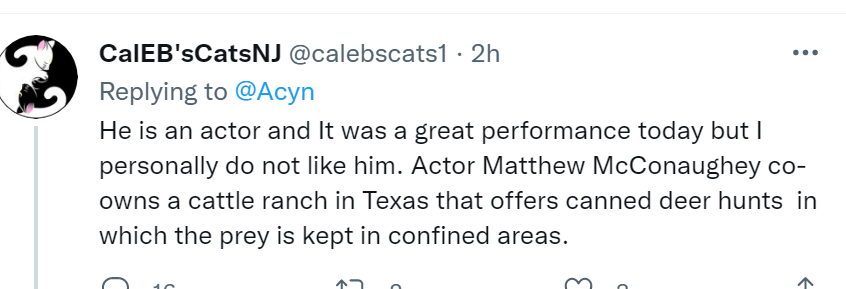
19 points19 points18 pointsthe GOP's favorite thing about school shootings is that they get older but the victims stay the saaaaame age18 points18 pointsbut how many people had mexican food for lunch? because that's as relevant as what you're telling me. 100% of gun deaths are accidental/preventable. 99% of abortions take place in the first two trimesters. when people argue against abortion, they use the most extreme examples (are you saying you're ok with a woman who's 8.5 months pregnant getting an abortion?!?). when people argue against guns, they can use, well, pretty much any example they want, because they're all extreme. to use your own numbers against you, in 2019, there were 45k firearms related deaths. in 2019 there were 6,300 3rd trimester abortions, most of which were to save the life of the mother or other rare fetal anomalies. your opinion is bad, and you should feel bad for posting it.18 points17 pointsHa, lots of friends and family at UT. I have more money than brain cells etc. Either way, I really don't hate you guys like I should. Start winning in football again and I'll change my tune fast. Jokes aside, I've supported the bobs here going way back and consider many of you dumbfucks to be my actual friends. Anyways, hope you get fucked hard in the championship series.17 points16 points16 pointsAnd we deserve to be roped in. Those of us who provided support to the Republican party over the past 30 years bear responsibility and blame for this ultimate outcome. Sure, give us credit for figuring shit out, and for ultimately taking a stand against their fuckery, but personally, I'd be a lot more proud of myself had I been on the right side of things all along. The fact that I wasn't is something I am -- and should be -- embarrassed and ashamed of. I enabled at least part of this journey of fuckery. I have culpability. I own that, and I would be dishonest as fuck if I tried to deny it. You can't undo the wrongs you did in the past. And you will bear culpability and responsibility for those, because that's how shit works. But you CAN stop supporting and enabling wrongs in the future. Von Tresckow was culpable for his fuckery of enabling Hitler's rise, but he made the choice to oppose Hitler, culminating in Valkyrie. He couldn't undo his past fuckery. But he could work to make shit right. I've done plenty of regrettable shit in my life -- I was dumb, I was selfish, I made mistakes, I had bad information, what have you. All I can do is to do what I can to not do any more regrettable shit (my occasional Steel Shank-worthy dietary choices notwithstanding) going forward. Supporting a political party that opposes the very idea of our Republic, and opposes the most basic and constitutionally permissible of measures that will save American lives would be a regrettable choice for me. Whether you're ready to accept that truth yet or not, it is a regrettable choice for you.16 points15 points15 pointsrepublicans - the majority of gun owners are responsible so we're not gonna do shit about any guns. also republicans - a tiny percentage of abortions happen late in term, so we're not gonna allow any kind of abortion.15 points14 points14 pointsThe 🐐 speaks Win it for Cat and all those teams she dragged to OKC who couldn’t get it done14 points13 pointsI gotta say, man....this team is something else. Not that anyone cares, but I've never been a women's sports guy. My wife doesn't like sports, we don't have kids (daughter) so it just really hasn't been a thing. Never really watched much, the occasional hoops game when Charli Collier was here...and even then it was 5 min while flipping around. This team has captured my heart...along with my friends. If you would have told me 5 years ago that I would have text chain going with buddies about softball, I'd think you were fucking nuts. I watched a little of the Washington series. A little more of the Arkansas series. Then full on fan for UCLA/AZ/OSU and will watch OU. Getting to "know" these players by name and watching them play with such heart/grit has been fucking awesome. Hook em!!13 points13 points13 pointsbut they're not being misused. they're being used as designed. guns were invented to fire projectiles to injure or kill things, right? is there another legal product that, when used properly, as designed, kills things? i can't think of one, but guns are certainly meant to do this. not only that, but the 2nd amendment is expressly written in support of this. the 2nd amendment doesn't say anything about cool collectibles, douchebags posing on instagram, or killing feral hogs. the 2nd amendment is about a well relegated militia in the wake of escaping a society controlled by a king. i don't know the history of guns, but i can guess they were invented to do harm, either while hunting for food (necessary) or winning a war (necessary). guns are not necessary anymore outside of law enforcement (debatable) or the military (are shooting wars still a thing?). if they all disappeared tomorrow, life would go on. more life, actually, if you want to just take a cursory glance at statistics. this argument isn't about the responsible gun owner. laws are not created for the best of us, they are created for the worst, the dumbest, the most irresponsible. and yes, they fuck it up for everyone. sorry, it's time to evolve.13 points12 pointsI had 3 great Uncles that fought in the Pacific. Guiseppe (Pep) was a Seabee that ran heavy equipment in building the runways. Though the islands were deemed "secure" enough for them to repair or construct, his unit saw heavy counter-attacks throughout the war. Unfortunately, I do not know what islands he worked on positively. I think the first was Guadacanal and Henderson Field. Uncle George was a Sergeant in the Marines and also saw heavy contact, and he would tell wild stories of fighting the Japanese in jungle warfare. In one invasion his Higgins boat was badly damaged/sinking far from shore and those that survived ditched their equipment/heavy packs, otherwise they would have drowned (as in SPR) before getting to shore. He had a Gunney Sgt. in his boat, that had pulled his KBar out and started cutting straps once the boat started sinking, those that followed his lead made it in and or were picked up after the battle by a US Submarine. I have told the last Uncle's story in more detail in the Memorial day Forum. Uncle Jasper (Bunch), named after his grandfather who had been a Lieutenant in the Confederate Cavalry, was the youngest and didn't need to serve but wanted to be like his older brothers. In the 3rd Marine Division, he took part in the fighting on Guam, and then later his 21st Marines were called in on Iwo after heavy casualties to the 4th and 5th marine Divisions. He was killed the day following the flag raising while his company took part in the attack on the second airfield (the one still in use today). For the comments quoted, Peleliu definitely could have have and should have been bypassed. This was admitted many years later by the Navy. same argument could be made for the Phillipines. Nimitz wanted Formosa (Taiwan), but in the long run, Roosevelt sided with MacArthur's plan, allowing him to fulfill his promise of "I shall return". Tarawa, a success overall, but a costly experience. Like said before, the coral reef surrounded the island over 500 yards offshore and there was a pier that ran out past it that the Japanese had manned with pillboxes. The navy had studied the tide table but there was conclusion (wrongful) that there would be enough water above the reef (5' was needed) but obviously the neap tide that happened, was not. I saw a documentary many years ago that the tide was especially lower than normal due to a lunar anomaly that only happens like once every 40 years. This was discovered like in the 80's or 90's. Of course, it had to happen on the day of the invasion. The boats and amphibs ran aground. Marines waded thru chest deep water, 500 yards under fire, or moved to the pier and fought their way while taking heavy casualties. It would have been worse, but on the first day, while receiving the heavy Naval bombardment, the communication lines from the command bunker were cut ( they were dug shallow due to the heavy coral) and Admiral Shibazaki, while moving himself and his command staff to another location to better direct the battle, were caught in the open and killed by by a naval shell. Two days of still heavy fighting would follow, but the Japanese had no coordinated plan for counter-attacks once he was killed. After the battle, the public was stunned by the casualties and wanted Nimitz and other commanders replaced. Roosevelt knew that costs would be high and stuck with them though. There was a Marine photography crew there with the first Marines on shore and recorded the battle. Roosevelt, knowing the cost that the war would take, had the film showed to the public so the true cost of the war and what it would take to win, and thus also help sell war bonds. The film "With the Marines at Tarawa" shows bloated, dead Marines floating along the shorelines. It's one of the few films that actually shows the enemy within yards of and being fired upon by the Marines. It's on youtube and just under 20 minutes long (worth the watch). Others have talked about being in Normandy or in the Pacific during WWII and which would be worse. One thing that would've made it better for the Normandy invasion, and especially at Omaha, would have been something that the Navy had and used in the Pacific. There was much rivalry and fighting for dollars between the services (Army/Navy at that time, as Marines were/still are a branch to the Navy and the Air Corps falling under the Army) back then as now, and they didn't share or lend equipment very well to the other branch. Normandy was an Army invasion and had no amphibious tracked vehicles (which had some ground support capability with heavy machine guns) which would have helped at Omaha. Out of the 20 something Sherman DD tanks that were to support and provide heavy fire support for the infantry there, only six made it ashore. The rest were swamped and lost (along with their crews) by the 6 ft + seas, having been put to to sea 6 miles out. The amphibious tracks that the navy and Marines used successfully in the Pacific could have helped in this scenario. The Army only had the use of Higgins boats and LSTs in Europe. last thing....CSB/ Growing up in awe of my Uncles and their service, (Dad was also in the Navy) I grew up being an avid reader of WWII. Just about everything I read growing up regarded military history. Freshman year (really ONLY yr) of college '81, we had an assignment in history class of 3 book reviews/reports for part of mid-terms. Your choice of books. One that I did was on the invasion of Tarawa. History was easy for me and upon getting the grades back (A's on all) there was a note at the bottom of the Tarawa report. The professor had written "Great report,...by the way, I was there". It turned out that we lived in the same neighborhood north of SA and I had other discussions with him about his service as a Marine in WWII. Besides what he wrote on my report, one thing that always stuck with me, was that he had seen a lot of combat even after Tarawa and he knew late in the war that it was just going to be the next landing or maybe the one after where he wasn't going to make it. His division, along with others, was tasked for and sailing to Japan for the invasion when the bombs were dropped. He knew and told me, "Those bombs saved my life".12 points12 pointsOne side of GQP's mouth- This is not a gun issue, it's a mental health issue. Other side of GQP's mouth- Proposals that would make access to firearms more restrictive due to mental health are non-starters. Also, we're slashing funding for mental health. Because lizard people.12 points12 pointsMan, still riding that high from last night. What a badass group of girls this is. The stories are incredible. JJ of course, the G.O.A.T. position player at Texas finally not just getting to the WCWS but playing for a championship. Mary, doing Mary things. Elish quitting on this team, then getting knocked out by us on the doorstep. Hailey coming in, and carrying the team. Czech and SS stepping up in huge roles. Day, Bella, Mia all elevating their games. What's really fun is that my 10 year old has really gotten into it too. She's played since tball, but is now paying attention and learning the game more outside of her own bubble. It's been a lot of fun to go through this season with her too12 points12 points11 points11 points10 pointsJust wanted to followup my neg on this post with an explanation - this is doublespeak at work here. You're at the same time saying that you support gun control efforts and legislative changes, but also asserting that you will NEVER vote for a candidate that would actually work towards that outcome. This is just dumb, stupid trolling so you can soak up some victimhood points so you can cry about how mean the CR is.10 pointsTime to make the Pirates walk the plank. I'm sure that short left fence at Clark-LeClair won't be an issue for ECU at all. Here's to Texas winning two and hitting the Outer Banks on Sunday10 points10 points10 points10 pointsGetting rid of food safety laws would be incredibly stupid. Foodborne illness used to be a huge fucking problem and the fact that we've practically eliminated it from our lives is an example of regulation working very well to solve a serious problem.10 points10 points10 points10 points10 points10 points10 points10 points9 pointsSometimes a simple grilled cheese just hits the spot. Just bread, butter, and cheese. Kid asked for them for dinner, and I happily obliged.9 points9 points9 points9 points9 pointsThis is rife with rationalizations, distorted characterizations of others' posts, and a small-minded view of what's wrong with the GOP. Rationalization for voting for the party of child murder, plague, and insurrection: They do other stuff that's okay. You don't name them. Distortion: "Your view is I should drop every other concern I have with the other party, put them in full and complete power." The only party close to being in full and complete power is your own. They're working hard to cement the deal through any means possible. You are likely projecting this will to absolute power from the actions of your own party. Posters are not in love with the idea of a Dem regime that's unopposed. They see the Dems, correctly, as the only party showing any concern whatsoever about the republic and it's citizens. Name the policies of the GOP that benefit the general population or preserve our democratic institutions. Small minded view of GOP: You want to argue issues which you do poorly. You want to hold onto whatever illusory principles you were convinced that the GOP stood for. You will not stand up, look in the mirror, and consider that your support has put the nation on a disastrous path. Many on here are ex-GOPs who realized the GOP was not about lowered taxes, controlled spending, and government restraint. I admire their ability to reassess and make the hard read. Your small mindedness is in clinging to sad, unreal ideals while ignoring that your party supported an insurrection. Your party blocks investigation into the insurrection. Your party is best represented by Mitch McConnel (consumate power seeker) and Donald Trump, consumate liar, thief, assaulter of women, and con man. Your party has a great many believers in the Q-Anon hoax and that the colored people are the real problem with the US. The elephant in the room is not just the symbol of the GOP; it's the fact that nobody in the GOP wants to deal with the fact that their party is on track to destroy the republic. How do they do that? They respond like this to Mathew M's poignant observation that a child could only be identified by the green shoes with a heart on the toe after being torn about by high velocity military rounds. They just don't won't fucking look. I'm usually pretty emotionally detached from these slaughters. This one with the child victims calling for help on their phones as the police dawdle outside is too much for my restraint. The presentation of Abbott afterwards outraged me. His offering up prayers in Uvalde makes me feel murderous myself. If you can't see all this for what it is, you are indeed part of the problem. Your vote may as well be a bullet or the hand taking money aimed at fighting Covid or providing mental health. Your party's brand is cruelty. You endorse it. Shame on you.
 9 points9 pointsYou say you're for them. But you keep voting for people who will never vote for them. Ergo, full of shit. I'm calling you out because the only way folks like you will wake up is when the harm you have caused is shoved in your face like a dog that has peed on the rug.9 points9 pointsI’d say this was the most important part: "They're cowards," Reyes said. "They sit there and did nothing for our community. They took a long time to go in… I will never forgive them."9 points9 pointsThis is so fucking heartbreaking and infuriating. As a husband of an elementary educator I think it’s important to explain how close these teachers become with these students at such a young age. To think every single student of his that was in the classroom at the time was murdered in front of him is unfathomable.9 points'Cowards': Teacher who survived Uvalde shooting slams police response excerpts below, it's a long article: TLDR: teacher recounts his experience of getting shot once, playing dead, and then getting double tapped by the shooter as he was enjoying the free time from the cops to be thorough. The last few sentences are the meat of the article: "It all happened too fast. Training, no training, all kinds of training -- nothing gets you ready for this," he said. "We trained our kids to sit under the table and that's what I thought of at the time. But we set them up to be like ducks." The solution is not more training, according to Reyes, but an overhaul of a system that allows easy access to firearms. Reyes emphasized that he is not against gun ownership, but advocated for common-sense gun legislation that would raise the age limit for would-be gun purchasers. "If you want to buy a gun, you want to own a gun, that's fine," he said. "But the age limit has to change. And I think that they need to do more background checks on it. Things just have to change. It must change."9 points9 pointsI'm not sure which thread to put this on. It's a succinct examination of Republican motivations and behavior. If one of you could use the magic de-Twitter-threader, I'd appreciate it.9 points9 pointsThe Hawaii LB is OVing this weekend.9 points8 points8 points8 points8 points8 pointsFor sure. My family ( I was born and raised in Mobile, Al) was close with Eugene Sledge author of With The Old Breed: At Peleliu and Okinawa. His pal, Sidney Phillips lived across the street from me growing up. Dr. Phillips would speak a bit about his experience on Guadalcanal. Sledge kept it all in until he wrote one of the definitive books about the war in the Pacific. Anyway /csb.8 points8 points8 pointsThe canvasser was fired by Abbott. She was immediately offered, and accepted, the same role with a pay raise from Beto.8 points8 pointsThis leaderboard is set to Chicago/GMT-06:00Football ... Basketball ... Baseball ... Other Sports ... Futbol ... 🤫995🤫 ... Gambling ... Movies & TV ... Music ... Hobbies ... Lulz ... Food & Travel ... Daily Texan ... Business & Markets ... Cloak Room ... Help ... For Sale ... Board Discussion ... Advertise... Tailgate Donations
Account
Search
Configure browser push notifications
Chrome (Android)
- Tap the lock icon next to the address bar.
- Tap Permissions → Notifications.
- Adjust your preference.
Chrome (Desktop)
- Click the padlock icon in the address bar.
- Select Site settings.
- Find Notifications and adjust your preference.
Safari (iOS 16.4+)
- Ensure the site is installed via Add to Home Screen.
- Open Settings App → Notifications.
- Find your app name and adjust your preference.
Safari (macOS)
- Go to Safari → Preferences.
- Click the Websites tab.
- Select Notifications in the sidebar.
- Find this website and adjust your preference.
Edge (Android)
- Tap the lock icon next to the address bar.
- Tap Permissions.
- Find Notifications and adjust your preference.
Edge (Desktop)
- Click the padlock icon in the address bar.
- Click Permissions for this site.
- Find Notifications and adjust your preference.
Firefox (Android)
- Go to Settings → Site permissions.
- Tap Notifications.
- Find this site in the list and adjust your preference.
Firefox (Desktop)
- Open Firefox Settings.
- Search for Notifications.
- Find this site in the list and adjust your preference.