Leaderboard
-

Brisketexan
Legacy Members82Points56128Posts -
Schulz2.0
Certifiably Surly82Points10189Posts -
closetojumping
Certifiably Surly71Points16180Posts -

tx 3 putt
Legacy Members71Points79509Posts



Popular Content
Showing content with the highest reputation on 05/03/24 in all areas
-
33 points
-
26 pointsPresuming the allegations in the indictment are anywhere close to true, lock him up. See, GQP, that's how you do it. IDGAF what "team" you're on. I don't care if it will cost my "team" someone with some seniority in Congress. Fuck criminals who abuse the public trust. Now, GQP....YOU try it. Come on. Give it a try.26 points
-
Texas will make a run this year. That initial part of your post is just fucking dumb. The roster is as solid as any in the country. Do you think there’s a flawless roster somewhere in which every spot is manned by veteran 4 and 5 stars? If so, point me to it. If not, get the fuck out with that ignorant take. Tired of seeing it on this board. Ohio State has a shit OL and Will fucking Howard at QB. Georgia has inexperienced offensive skill players and across the secondary. Oregon just lost a ton to the draft on the skill side. Are those not teams that you think could “make a run for a title”? As to the rest, Toia and Alexander had their home schools match big offers. One of those was fucked by a Texas $9.95er. Are you making an argument that Texas should have gone in with something ridiculous for either of those anyway? The original numbers are ridiculous in the first place. Texas wanted no part of Nolen, for reasons noted here repeatedly, and money played no part in that evaluation or non-offer. Honestly, from here forward, when someone laments Nolen, they’re getting auto-negged. I don’t give a fuck if he wins national defensive player of the year at Ole Miss, the Texas staff had excellent reasons to avoid the guy. “It’s not my money” and then ignorantly touting the false notion that Texas was beaten due to money with the names you reference is a solid surly move. No one has an endless spigot. If you want Texas to year in and year out get the top classes and the top guys in the portal, discipline matters. Paying $1M for a good but not great guy at one spot not called QB is the kind of stupidity we should be gleeful about witnessing from our enemy.26 points
-
I’m not going to go into too much detail for what should be obvious reasons for most of you. But here are some thoughts, some humorous. Missouri put the big offer out there. They’ll be doing more of this. It’s effective and will land them some guys. It will also make other programs really think about how much they want a player. This is usually going to be good for us. They sit on fertile terrain that has often been plundered by Ohio State, OU and SEC schools. Them being good impacts other rosters. Texas will still get who they want if they’re sure they want them - see Ryan Wingo. LSU, as we have discussed on this board, is poor. Baseball-only clowns will often interject Marucci because they are myopic and uninformed. There have been interlopers on recruiting threads over the past few years insisting that LSU will do what they have to do because they did so when only 10-ish schools were playing the bag game and the numbers were a lot smaller. LSU was able to scratch together about 40% of where this allegedly finished and that was scrambling. OU’s choices here have consequences. They focus on football, softball, gymnastics, and targets of opportunity for baseball and basketball. There are knock-on effects for robbing Peter to pay Paul. We will see that impact somewhere, probably in hoops and baseball. The player wanted LSU. They’re weren’t even close. The player wasn’t super interested in OU but the handler was. Good luck inside the new Jimbo Fisher school of roster management being deployed in Norman. Venables seems to genuinely believe that Clemson won two national titles because they had the best DLine in college football. That no doubt helped, but maybe, just maybe, having two awesome QBs that were picked at the top of the NFL draft plus elite skill talent on both sides of the ball also played a role? I don’t know. Weird.26 points
-
20 points
-
19 points19 points19 points19 pointsOr, maybe, Texas wasn’t willing to overpay for one player and the impact the overpayment would have on the locker room, regardless of whether that player was at a position of need. Being principled in roster building and NIL is more important in the long term. Also, while we are in a great position to make a run this year, we are building a foundation for a long-term run. Not just one year. This shit is for the next ten years. Focusness, bitches.18 points18 points18 pointsAt least twice on Thursday, Texas and at least one other college program were contacted by Damonic Williams' agent asking for "more". Yes, that's a tried and true negotiating tactic. I don't blame an agent for trying, nor should you. The response? Texas did not budge. So Williams announced for OU last night. ** That is portal recruiting for some in this day and age. It's partially what Nick Saban said drove him out of the game. But the Williams situation is not the case for every player, every agent, or every family in recruiting. And that's where I think Steve Sarkisian has it right. Yes, NIL should be there. But it should be the last thing discussed, not the first. I'm not so sure that was ever the case in the Williams recruitment, even from the very outset, and perhaps why the juice just wasn't worth the squeeze. -Bobby17 points15 pointsMarry a woman named Imelda, you're gonna be led down a dark path.15 pointsI think the debate over what he meant has made people lose track of a simple fact. He is dumb as shit. So whatever is the dumbest explanation, is probably the correct one.15 points14 pointsI can fix her.14 pointsBet the pizzas were from here…
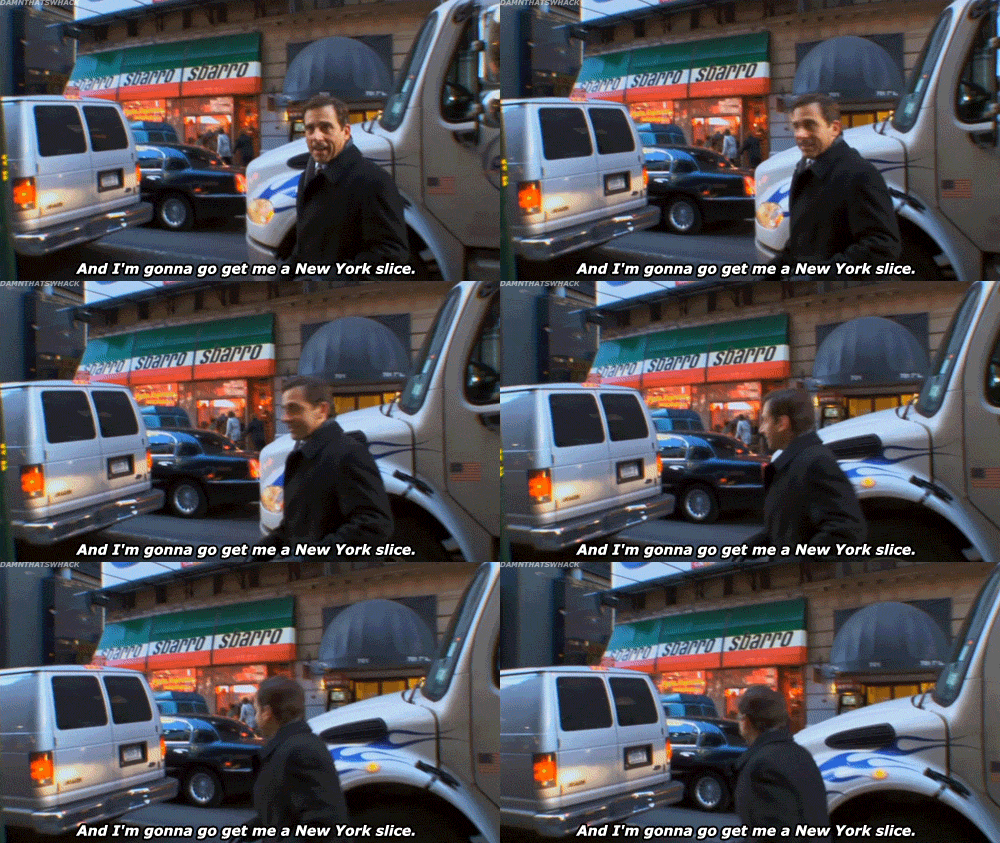 14 pointsMaybe the staff isn’t as convinced as you are that we need a single slight upgrade at DT for high 6 figures to win it all. Idk.14 pointsAnother $1000 oughtta do it this time. /Susan Collins14 pointsand again.... he needs a night or two in jail period14 pointsIt’s pretty crazy that we had a president for four years who apparently doesn’t understand anything about anything.14 points14 pointsUPDATE!!! I got an offer. I'll be working as the retirement plan administrator for a mid-sized employer based here in Houston with employees spread across the country. It's a nice bump in comp over my prior role. This is not the job I detailed above. I last talked with them two weeks ago and was told what the hold up is. I'm 95% sure that their offer is going to come in below this one. I think my work here is done. Talk about a wave of relief. Nerves really hit right after the offer call. Wow, just wow.14 points13 pointsWordle 1,049 4/6 ⬜⬜⬜⬜🟨 ⬜🟨⬜⬜🟨 ⬜🟨⬜🟨🟨 🟩🟩🟩🟩🟩 Daily Quordle 830 7️⃣3️⃣ 8️⃣6️⃣ m-w.com/games/quordle/ ⬜⬜⬜⬜🟩 ⬜⬜🟩⬜⬜ ⬜⬜🟨⬜⬜ 🟨⬜⬜🟩⬜ ⬜⬜⬜⬜⬜ 🟩🟩🟩🟩🟩 ⬜🟩🟩🟩🟩 ⬛⬛⬛⬛⬛ ⬜🟨🟨⬜⬜ ⬛⬛⬛⬛⬛ ⬜🟨🟨🟨⬜ ⬛⬛⬛⬛⬛ 🟩🟩🟩🟩🟩 ⬛⬛⬛⬛⬛ ⬜⬜🟩⬜🟩 ⬜⬜🟨🟨🟨 ⬜⬜⬜⬜⬜ ⬜⬜⬜⬜⬜ ⬜⬜🟩⬜⬜ ⬜⬜🟨⬜⬜ ⬜⬜⬜⬜🟩 ⬜⬜⬜🟨🟨 ⬜🟨⬜🟨⬜ ⬜🟨🟨🟨🟩 🟨⬜🟨🟨⬜ 🟩🟩🟩🟩🟩 🟨⬜⬜⬜🟩 ⬛⬛⬛⬛⬛ 🟩🟩🟩🟩🟩 ⬛⬛⬛⬛⬛ Blossom Puzzle, May 3 Letters: A C E T L O R My score: 433 points My longest word: 11 letters 🌷 🌻 💐 💮 🏵 🌸 🌹 🌼 🌺 🌷 🌻 Connections Puzzle #327 🟦🟦🟦🟦 🟨🟨🟨🟨 🟪🟪🟪🟪 🟩🟩🟩🟩13 points12 pointsFucker should already be in jail due to the nature of his alleged crimes and the fact that most of them have been videotaped. Jail Trump for this at the end of the day so that he has to stay in jail until Monday. Or just sentence him to two or three days. Or firing squad. Works either way.12 pointsNo problem with any of the protestors who are being peaceful and non-destructive and obeying state laws and campus rules. No problem with any of the counter-protestors who are being peaceful and non-racist. This is America, these are college campuses, this is how things are supposed to play out. The violence at UCLA on the other hand, is sad, and the local authorities and university administration failed miserably at getting it handled appropriately, early on.12 points12 points12 pointsWordle 1,049 4/6* ⬜🟨⬜⬜🟨 ⬜🟨⬜🟨🟨 ⬜🟨🟩🟩🟩 🟩🟩🟩🟩🟩 Daily Quordle 830 5️⃣6️⃣ 7️⃣3️⃣ m-w.com/games/quordle/ ⬜🟨⬜⬜🟩 🟨⬜⬜🟩⬜ ⬜⬜🟨⬜⬜ ⬜⬜⬜🟨🟩 ⬜🟨🟨🟨⬜ 🟨⬜⬜⬜⬜ ⬜🟩🟨🟩🟩 🟨⬜⬜⬜⬜ 🟩🟩🟩🟩🟩 ⬜⬜⬜⬜⬜ ⬛⬛⬛⬛⬛ 🟩🟩🟩🟩🟩 🟨🟩⬜⬜🟩 🟩🟨⬜⬜🟨 ⬜⬜⬜⬜⬜ 🟨⬜⬜⬜⬜ 🟨⬜🟨🟨⬜ 🟩🟩🟩🟩🟩 ⬜⬜🟨⬜🟩 ⬛⬛⬛⬛⬛ 🟨⬜⬜⬜🟩 ⬛⬛⬛⬛⬛ ⬜⬜🟩⬜⬜ ⬛⬛⬛⬛⬛ 🟩🟩🟩🟩🟩 ⬛⬛⬛⬛⬛12 pointsWordle 1,049 4/6* [emoji834]🟨[emoji834][emoji834]🟨 [emoji834][emoji834][emoji834]🟩🟨 🟩[emoji834][emoji834]🟩[emoji834] 🟩🟩🟩🟩🟩 Connections Puzzle #327 🟦🟦🟦🟦 🟩🟩🟩🟩 🟪🟪🟪🟪 🟨🟨🟨🟨11 points11 points10 points10 pointsI think what the internet and social media allows is for them to form groups, become organized, and be collectively influenced by agitators to take action. Comic book guy used to just sit in his room geeking out over comics. Maybe he was friends with a couple other comic book nerds. They might be like, "Damn, I wish I could get laid." But that's where it kind of stopped. Now you have large pods of comic book guys coalescing into groups online. Those groups have overlap. And as the people in these online communities get to talking, they start to wonder wtf they aren't all getting Batman level's of pussy. It becomes an echo chamber of sexual disenfranchisement. At that point, they are ripe for conversion from being a support group of sexually frustrated geeks to being a motivated force for taking action and striking out against their perceived nemesis. It just takes the right messaging and view of events to set them off. That's a pattern happening with conspiracy theorists, racists, incels, anti-vaxxers, environmentalists, BLM, #metoo and other groups. Some of them are righteous causes that have been corrupted or coopted, either wholly or in specific instances. Collectively, its all leading to a growing sense of societal malaise and erosion of faith in our institutions and each other. Its a problem that no one is effectively combatting, maybe not even trying. Efforts seem more focused on adding groups of angry, scared and motivated followers to your political tribe.10 points10 pointsThis isn’t funny or cool, it’s sad and gross.10 pointsWhile y’all were workshopping and waterfalling the requirements, corporate dictated we adopt an agile mindset. To that end, I built a prototype. It was three story points on the Fibonacci scale. video-4c658c37.mov10 points10 pointsWe are slap in the middle of primary season here in Georgia, just got walk up unsolicited Republican stumpers at the door for the first time. My wife is talking to them, it's not going well for them. All I caught of her conversation thus far was "my candidate isn't on trial for paying off a porn star, insurrection, election fraud and racketeering. How about yours?"10 pointshappy friday.9 points9 pointsIf ya'll think the DT situation here is worrisome, we could be LSU right now. That board is livid about not landing a single portal DT, except some scrub from Wisconsin back during the first window, and losing the top three DT's from last year's terrible defense with nothing waiting in the wings. Those clowns were convinced all the top portal DT's would be begging to come play for Bo Davis. They are also coming to the realization that DT recruiting for this current class isn't going to well.9 pointsPlaceholder for Hope Hicks afternoon testimony Trump looks very unhappy as he departs the courtroom, and his lawyer Todd Blanche is not smiling. The lawyers are not quite done yet, even though the jury is. Prosecutors have asked whether they can question Trump, if he testifies, about his nine violations of his gag order. Todd Blanche, a defense lawyer, is asking the judge to bar any such question. Blanche slips and calls Trump “Mr. Trump,” before correcting himself and using Trump's preferred label: “President Trump.” But Merchan says he agrees with the defense, saying it would be too prejudicial for a jury to hear that the judge presiding over the trial at hand had found against the defendant. That’s a win for Blanche. Merchan’s ruling doubles as an acknowledgment of his own sway over the jury. As much as the defense lawyers — and Trump — complain about Merchan, he has been bending over backward to try to seem fair to Trump. Matthew Colangelo, the prosecutor, responds, saying that the findings from the judge that Trump violated his gag order are directly relevant to Trump’s credibility if he takes the stand. He contradicts Blanche's stance, saying that there is case law supporting his argument. Previously, we’ve seen Justice Merchan respond positively to the presentation of case law — older cases in which judges discuss the matters in question —and express frustration with the defense when they don’t cite any. Emil Bove’s last question to Hope Hicks was a pointed one, calling attention to the way that the actual charges of falsifying business records have not been discussed in two full weeks of testimony. “While you were focused on your job at the White House,” he asked, “you didn’t have anything to do with the business records of the Trump Organization 200 plus miles away in New York City, did you?” Hicks said she didn’t. That will conclude testimony for the week. The judge is excusing the jury now. Hope Hicks is excused and leaves the courtroom. Overall, I think the defense will be very happy with what it got from her — but so will the prosecution. Trump doesn’t look in Hicks’s direction as she leaves. She also doesn’t look toward him. Emil Bove is now asking Hope Hicks about Trump's concerned over how his wife would react to the “Access Hollywood” tape. “President Trump really values Mrs. Trump’s opinion, and she doesn't weigh in all the time, but when she does, it’s really meaningful to him,” Hicks says. “He really, really respects what she has to say. I think he was just concerned of what her perception of this would be.” Hicks’s comments are similar to what a number of former White House officials have said about Trump’s reactivity to his wife’s opinions, regardless of what else was swirling around. And again, this could aid the defense’s “family man” argument. Emil Bove, the defense lawyer, has begun to ask Hope Hicks about her work on Trump's presidential campaign. He continues to press the argument that the work she did for Trump, and the work done by David Pecker, the former publisher of The National Enquirer, was all the normal course of business for a presidential candidate. Emil Bove builds on this theme, getting Hope Hicks to agree that Michael Cohen “went rogue” and did things that were “unauthorized.” These answers are largely helpful to the defense’s efforts to build a case that Cohen could have arranged the hush money without Trump’s direct orders. Hicks further makes the defense lawyers’ point for them, saying of Cohen, “He liked to call himself a fixer, or Mr. Fix-it, and it was only because he first broke it.” Bove, who can be a real pitbull in cross-examinations, is being studiously gentle here with Hicks. Emil Bove is now asking Hicks about how Michael Cohen did not have an official role with Trump's 2016 campaign. “He would try to insert himself at certain moments,” she said, which will feed into the defense's argument that Cohen was freelancing. This line of questioning from the defense is clearly designed to create distance between Trump and Cohen and to minimize Cohen’s role. The comment echoes something David Pecker, the former publisher of The National Enquirer, said of Cohen, that he would try to “inject” himself into the campaign. Distancing Cohen from the campaign also supports the argument that the hush-money payment he made to Stormy Daniels was not a campaign-finance violation. Emil Bove, the defense lawyer, heads straight into it, asking Hope Hicks about her relationships with the Trump family and employees of the Trump Organization. These questions may seem innocuous, but they will also remind Hicks of her fondness for the family whose head she is now testifying against. For an already emotional witness, this questioning is really difficult. Meanwhile, the sketch artist in front of me has begun a drawing of Hicks crying, holding up a tissue to her eyes. Hope Hicks is back — still looking fairly upset. She walks to the witness stand and takes a seat. The jurors will be brought in shortly and cross-examination will resume. As we mentioned earlier today, this is going to be a tricky cross-examination for the defense lawyer, Emil Bove, especially with a vulnerable witness. And Hope Hicks just began to cry. Hicks suddenly broke down a little bit when she was asked about her time at the Trump Organization, and we’re taking a break. Trump, who has largely avoided looking at Hicks during her testimony, locks his eyes on her as she starts to cry. Bove has a tough job here. His client is furious with Hicks. And Bove will have to impeach her credibility or otherwise disrupt her testimony without coming off as too aggressive and alienating sympathetic jurors. The prosecutors are now leaving the room hastily, looking somewhat concerned. Hicks’s emotion seemingly came quickly, as Emil Bove, the defense lawyer, had just begun with a few basic questions. Before that, she had been remarkably composed in the face of an intense moment Hope Hicks is asked what she made Trump's suggestion to her that Michael Cohen had made a payment to Stormy Daniels “out of the kindness of his heart.” Hicks acknowledges that it did not fit in with the Cohen she knew, who she did not understand to be “an especially charitable person or selfless person.” The direct examination concludes with those very tough questions and Emil Bove, one of Trump's lawyers, stands up to cross-examine Hicks. It's a Friday afternoon and there’s less than an hour to go but the jury seems riveted. We’ve had a really remarkable day of testimony, most of it from Hope Hicks. For the record, we have had two fresh witnesses today, both of whom have cast aspersions on Michael Cohen. Hope Hicks just all but told the jury that Cohen had lied about the hush-money payment. Another sign that prosecutors are none too concerned about these lies. Cohen says that during this period of his life, he lied on Trump’s behalf. Hope Hicks is now describing the initial Wall Street Journal article about the $130,000 payment to Stormy Daniels. She says she cannot recall certain facts about this period, including a conversation with Michael Cohen. But she says if the prosecution has something to refresh her memory, she is willing to look at it. She has gotten considerably more nervous-looking again, clenching her jaw and stumbling a bit in her speech. As Hope Hicks starts talking about her time at the White House, after Trump was elected, Trump is sitting motionless at the defense table with his eyes closed. Hope Hicks says Trump was very concerned about the Wall Street Journal story about his alleged affairs and the hush-money payments. He was worried about his wife’s reaction and asked Hicks to make sure the newspapers weren’t delivered to their residence this morning. Trump also asked her how the story “was playing” — given this was only a few days before the election. Hicks just handed a real gift to the defense. As Matthew Colangelo, the prosecutor, asked about Trump’s reaction to the Wall Street Journal article, she responds: “He was concerned about how it would be viewed by his wife.” This is something the defense touched upon in its opening statement when it sought to portray Trump as a family man. It provides an alternative motive for covering up damaging information, a believable one that is unrelated to his electoral chances. Colangelo sought to get another, more helpful response, asking if Trump was concerned about the campaign. Hicks acknowledged that Trump was concerned about how the story was playing — but her answer about his family was far more specific, and definitive. We will not be surprised if we see that in the defense’s closing argument. We know this, but it’s still amazing to hear Hope Hicks say it aloud: During the period where she was texting with Michael Cohen about the Wall Street Journal story and the damage it could potentially cause, the presidential election was three days away. Listening to the testimony about the timing of all of this underscores the duality of Trump’s life at that moment. On the one hand, he was on the cusp of becoming the president of the United States. On the other, he was still wading in the muck of the tabloid New York City life he had lived for decades. The prosecution has now brought up text messages between Hope Hicks and Michael Cohen on Nov. 4, 2016, after the Wall Street Journal article about Trump’s alleged affairs with Karen McDougal and Stormy Daniels was published. Cohen is repeatedly — and with great urgency — asking Hicks for a status update on the story. In these text messages, Cohen is closely monitoring how many other outlets are picking up on the WSJ story about the alleged hush-money payments. When Cohen mentions how little coverage the story was getting, Hope replies to Cohen, “Keep praying!! It’s working!” Hicks acknowledges the irony as she reads these messages, in which Cohen fretted about the story becoming more public than it already was. The story, of course, became a criminal case — the one you’re reading about right now. One text from Cohen to Hicks is particularly damaging to the defendant: Cohen says he’s got a denial from Stormy Daniels, whom he calls “Storm,” but is holding it in reserve. Hope Hicks is explaining how the Trump campaign responded to the story about Karen McDougal, who by this point had been paid money by the parent company of The National Enquirer to keep quiet. Hicks says that, internally, she was told — presumably by the candidate himself — that Trump had not had an affair with McDougal, but that she did not remember Trump “verbatim” saying that he had no knowledge of that hush-money deal. The jury is seeing something that prosecutors have sought to show them is a lie being shared with the media, and the public. We then see that Hicks denied “unequivocally” to the Wall Street Journal that Trump had a relationship with Stormy Daniels. Hicks says that’s what she was told, and that she testified to that effect in front of the grand jury that indicted the former president. Hope Hicks's testimony is a good reminder of something reporters frequently encounter. Some public relations people will flatly deny stories, and put their name to those denials, without having any idea whether the stories they are denying are true or false. Court is only expect to run for another hour and twenty minutes. They’re ending early today. It will be interesting to see if Hope Hicks is back on the stand on Monday. Hope Hicks, testifying again, says she denied that Trump had a relationship with Stormy Daniels to The Wall Street Journal. She is then asked if she witnessed conversations between Trump and Michael Cohen. “I believe I heard Mr. Trump speaking to Mr. Cohen shortly after the story was published,” she says. The more prosecutors can illustrate the Cohen-Trump relationship — which they really have started to home in on, starting yesterday with a recording of the two men speaking — the easier it may be to persuade jurors of Cohen’s story that he was doing Trump’s bidding as he sought to silence Daniels. We are back in the courtroom and Hope Hicks has returned to the stand. She left off starting to discuss Stormy Daniels, the porn star who would eventually receive a payment from Trump’s personal lawyer, Michael Cohen.9 pointsIn Economics, there is a term about auctions called “The Winner’s Curse”- the idea that when you win an auction, you have agreed to pay more for something than anyone else feels it’s worth. (That can be ok, if you have more info about its value, or its value to you). There are two ways to lose an auction: 1. Not having enough money to win 2. Stopping bidding because you don’t believe it’s worth more. I think, with Texas, it was number 2.9 pointsThe administrations are a bunch of fucktards who buy into all this pro Hamas bullshit but also love that flow of money. So they have sat on their hand subtly endorsing these paid agitators coming aboard. Appeasement monkeys. These schools should have strict policies in place and act on them immediately. For students, if you violate law or campus policy, illegally enter buildings, destroy property, etc. you will be arrested. You will be immediately expelled. You will be billed for the full amount of all damage by your group. That bill will be sent as well to your parents. If you are a professor or instructor participating you will be arrested and fired. If you are a paid agitator you will be arrested and shipped to Gaza. That is all.9 pointsIf we are lucky we will get the Jonestown Kool-Aid Club network.9 pointsWordle 1,049 4/6 ⬜⬜🟨⬜⬜ ⬜⬜⬜🟩🟨 🟩🟨⬜🟩⬜ 🟩🟩🟩🟩🟩 Daily Quordle 830 6️⃣4️⃣ 7️⃣5️⃣ m-w.com/games/quordle/ 🟨⬜🟨🟨⬜ ⬜⬜⬜⬜⬜ ⬜⬜⬜⬜⬜ 🟩🟨⬜⬜⬜ ⬜⬜⬜🟨⬜ 🟨🟨🟨⬜⬜ ⬜⬜⬜⬜⬜ 🟩🟩🟩🟩🟩 ⬜🟨🟨🟨⬜ ⬛⬛⬛⬛⬛ 🟩🟩🟩🟩🟩 ⬛⬛⬛⬛⬛ ⬜⬜🟨⬜⬜ ⬜⬜🟨⬜🟩 ⬜⬜⬜⬜⬜ ⬜⬜⬜⬜⬜ ⬜🟨⬜🟨⬜ ⬜🟨⬜🟨⬜ ⬜⬜🟩⬜⬜ ⬜⬜🟨⬜⬜ 🟨⬜🟨🟨⬜ 🟩🟩🟩🟩🟩 🟨⬜⬜⬜🟩 ⬛⬛⬛⬛⬛ 🟩🟩🟩🟩🟩 ⬛⬛⬛⬛⬛ Daily Sequence Quordle 830 4️⃣5️⃣ 6️⃣7️⃣ m-w.com/games/quordle/ ⬜⬜🟩⬜⬜ 🟨🟨⬜⬜⬜ ⬜⬜🟨⬜⬜ ⬜🟨⬜⬜⬜ 🟨🟨⬜⬜⬜ ⬜⬜⬜⬜🟨 🟩🟩🟩🟩🟩 ⬜⬜⬜⬜⬜ ⬛⬛⬛⬛⬛ 🟩🟩🟩🟩🟩 🟨⬜🟨⬜⬜ ⬜🟨🟨⬜⬜ ⬜⬜⬜🟨⬜ 🟨⬜⬜⬜⬜ ⬜🟨⬜🟨⬜ ⬜⬜⬜⬜⬜ ⬜⬜🟨🟨⬜ ⬜⬜🟨⬜⬜ ⬜⬜🟨⬜⬜ ⬜⬜⬜⬜🟨 🟩🟩🟩🟩🟩 ⬜⬜⬜🟨⬜ ⬛⬛⬛⬛⬛ 🟩🟩🟩🟩🟩 ClickWord.org Daily 454: 975 points (top 1% 🚀) 9 words: ⚛️⚛️⚛️🟥🟥🟧🟧🟨🟨 💪 Best word: 332 points 🔥 Streak: 5 days #ClickWord #ClickWordDaily4549 pointsWordle 1,049 4/6 ⬛⬛⬛⬛🟨 ⬛🟨⬛🟨🟨 ⬛🟨🟩🟩🟩 🟩🟩🟩🟩🟩 Daily Quordle 830 6️⃣4️⃣ 7️⃣5️⃣ m-w.com/games/quordle/ ⬜⬜⬜⬜🟩 🟨⬜🟩⬜⬜ ⬜⬜🟨⬜🟨 ⬜⬜⬜🟨⬜ ⬜⬜⬜🟨🟨 🟩🟨⬜⬜⬜ ⬜⬜⬜⬜⬜ 🟩🟩🟩🟩🟩 ⬜🟨🟨🟨⬜ ⬛⬛⬛⬛⬛ 🟩🟩🟩🟩🟩 ⬛⬛⬛⬛⬛ ⬜⬜🟩⬜🟩 ⬜🟨🟨⬜🟨 ⬜⬜⬜⬜⬜ ⬜⬜⬜⬜⬜ ⬜⬜⬜🟨⬜ ⬜⬜⬜🟩🟨 ⬜⬜🟩⬜⬜ ⬜⬜🟨⬜⬜ 🟨⬜🟨🟨⬜ 🟩🟩🟩🟩🟩 🟨⬜⬜⬜🟩 ⬛⬛⬛⬛⬛ 🟩🟩🟩🟩🟩 ⬛⬛⬛⬛⬛9 pointsWordle 1,049 4/6 ⬜⬜🟩⬜🟨 ⬜⬜🟨⬜🟩 ⬜🟨🟩🟩🟩 🟩🟩🟩🟩🟩 #Worldle #833 (03.05.2024) 1/6 (100%) 🟩🟩🟩🟩🟩🎉 🧭🔤👫🪙 https://worldle.teuteuf.fr Daily Quordle 830 7️⃣5️⃣ 6️⃣3️⃣ m-w.com/games/quordle/ ⬜⬜⬜⬜🟩 🟨⬜⬜🟩⬜ ⬜⬜🟨⬜⬜ 🟨⬜⬜⬜⬜ ⬜🟨🟨🟨⬜ 🟨⬜⬜⬜⬜ ⬜⬜⬜⬜⬜ 🟩🟩🟩🟩⬜ ⬜⬜⬜⬜⬜ 🟩🟩🟩🟩🟩 ⬜🟨⬜⬜🟩 ⬛⬛⬛⬛⬛ 🟩🟩🟩🟩🟩 ⬛⬛⬛⬛⬛ 🟨⬜⬜⬜🟩 🟩⬜⬜⬜🟨 ⬜⬜🟨⬜⬜ ⬜⬜🟨🟨⬜ 🟨⬜🟨🟨⬜ 🟩🟩🟩🟩🟩 ⬜⬜🟩⬜⬜ ⬛⬛⬛⬛⬛ ⬜⬜🟩⬜⬜ ⬛⬛⬛⬛⬛ 🟩🟩🟩🟩🟩 ⬛⬛⬛⬛⬛ #travle #506 +0 (Perfect) ✅✅✅✅✅✅ https://travle.earth Connections Puzzle #327 🟨🟨🟨🟨 🟩🟩🟩🟩 🟪🟦🟪🟪 🟦🟦🟦🟦 🟪🟪🟪🟪9 pointsIf you think about it we already have a version of the same type of guy we're dealing with again for that office right now9 points9 points9 pointsThis leaderboard is set to Chicago/GMT-06:00Football ... Basketball ... Baseball ... Other Sports ... Futbol ... 🤫995🤫 ... Gambling ... Movies & TV ... Music ... Hobbies ... Lulz ... Food & Travel ... Daily Texan ... Business & Markets ... Cloak Room ... Help ... For Sale ... Board Discussion ... Advertise... Tailgate Donations
Account
Search
Configure browser push notifications
Chrome (Android)
- Tap the lock icon next to the address bar.
- Tap Permissions → Notifications.
- Adjust your preference.
Chrome (Desktop)
- Click the padlock icon in the address bar.
- Select Site settings.
- Find Notifications and adjust your preference.
Safari (iOS 16.4+)
- Ensure the site is installed via Add to Home Screen.
- Open Settings App → Notifications.
- Find your app name and adjust your preference.
Safari (macOS)
- Go to Safari → Preferences.
- Click the Websites tab.
- Select Notifications in the sidebar.
- Find this website and adjust your preference.
Edge (Android)
- Tap the lock icon next to the address bar.
- Tap Permissions.
- Find Notifications and adjust your preference.
Edge (Desktop)
- Click the padlock icon in the address bar.
- Click Permissions for this site.
- Find Notifications and adjust your preference.
Firefox (Android)
- Go to Settings → Site permissions.
- Tap Notifications.
- Find this site in the list and adjust your preference.
Firefox (Desktop)
- Open Firefox Settings.
- Search for Notifications.
- Find this site in the list and adjust your preference.