

kopp0e
Legacy Members
-
Joined
-
Last visited
Everything posted by kopp0e
-
CP3 getting a ring before both former Clippers' mate Griffin & old Rockets' buddy Harden, is comical...
-
It looks like Indiana played the role of Nebraska fightin' farmers way back when..?
-
Well, I see we have the "multiverse of madness" in effect here as some fellow poster from dirt has come to proclaim UT should in fact, go ACC... The issue you bring up about Cleveland county is quite specific, that tells me you could be from Norman, likely wanting OU & Kansas in B1G too... --- Originally posted by kopp0e View Post According to the data you posted yourself (follow me here) USC has better tv ratings than does Nebraska over the season... If I am wrong, just prove it by showing entire season as in 2019/ 2018/ 2017, to the best of my memory, has USC as better... You should care if UT fans are interested in the drivel you post of "UT to ACC" agenda otherwise why post it here at all sir..? So what reason do you have to "sell your agenda" on Oklahoma website, about Texas to ACC, when Texas isn't interested..? --- Having Oklahoma & Texas move to SEC [along with Kansas & Texas Tech @18] is a far better bargain than being in a far-flung ACC + A&M in SEC... That logistically doesn't sound good as Oklahoma & Texas luring the top brands out west, getting Colorado back/ raiding Oregon/ USC/ Utah too... Anyway, glad you came over to the dark side, I think the ACC needs to worry how to fix revenues that are now stuck in a catfight with PAC for last...
-
Are we soon looking at a market correction of some sort..? So should I wait a year or two, after relocating from Oklahoma City to Phoenix, to buy a home..?
-
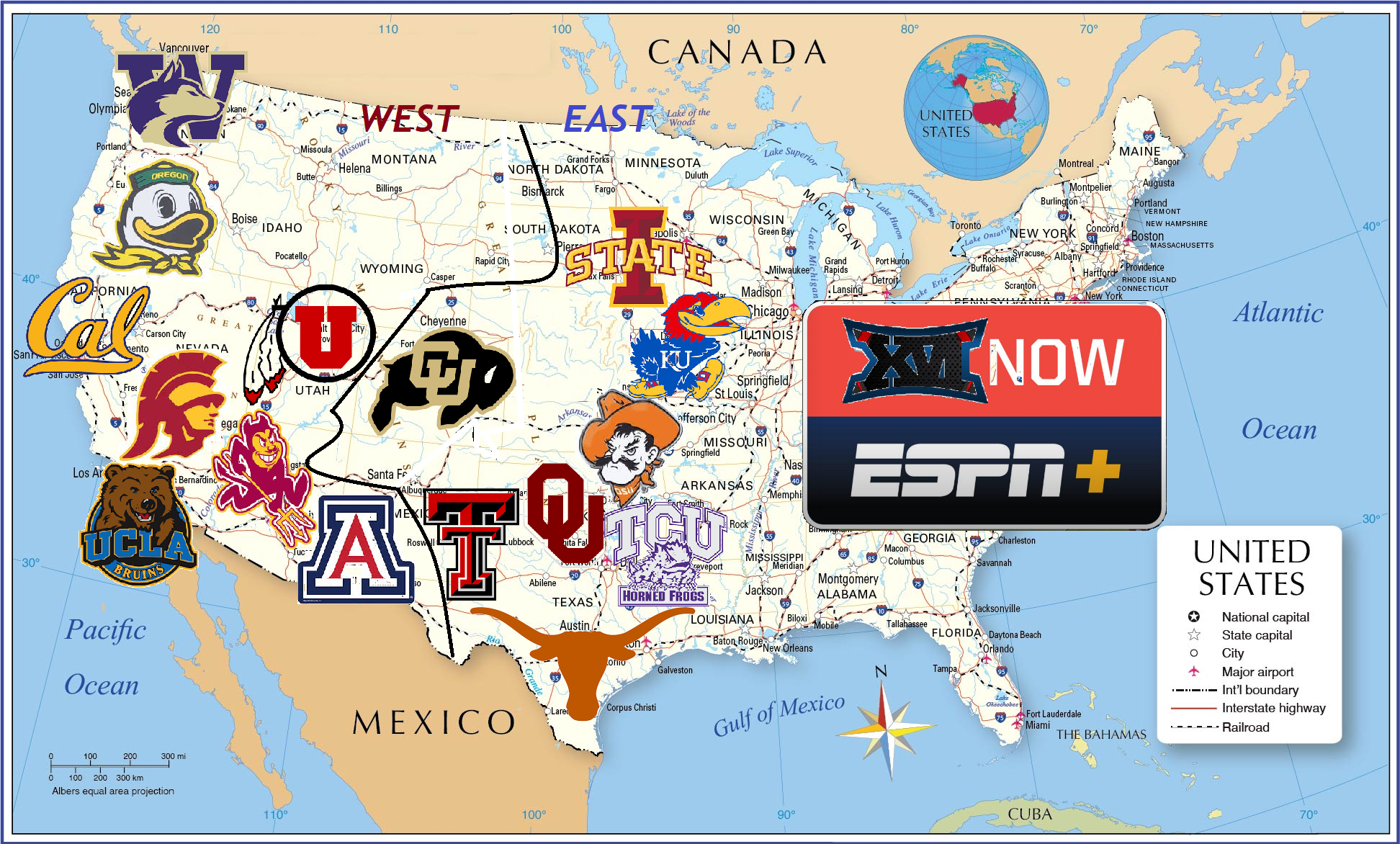
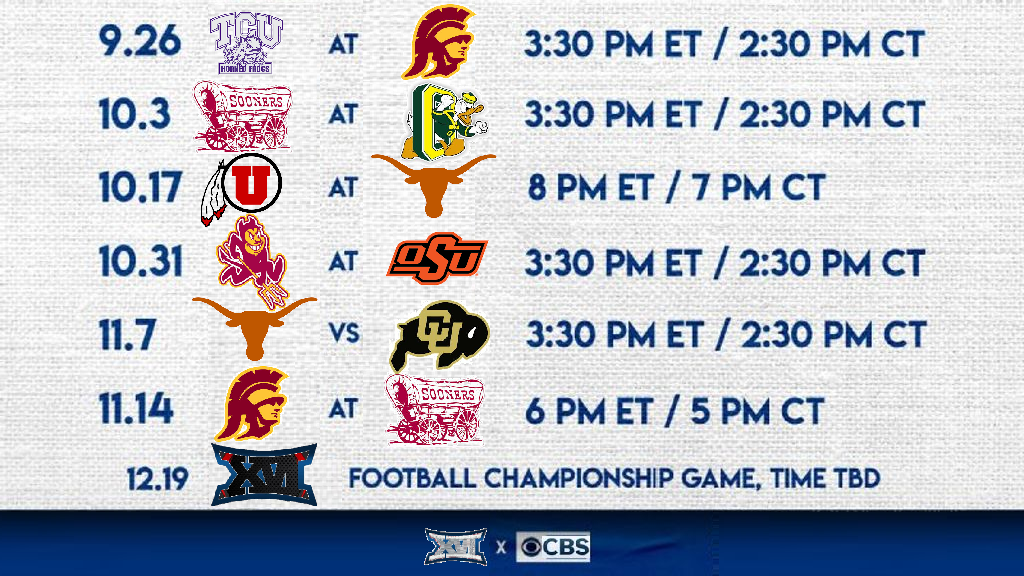
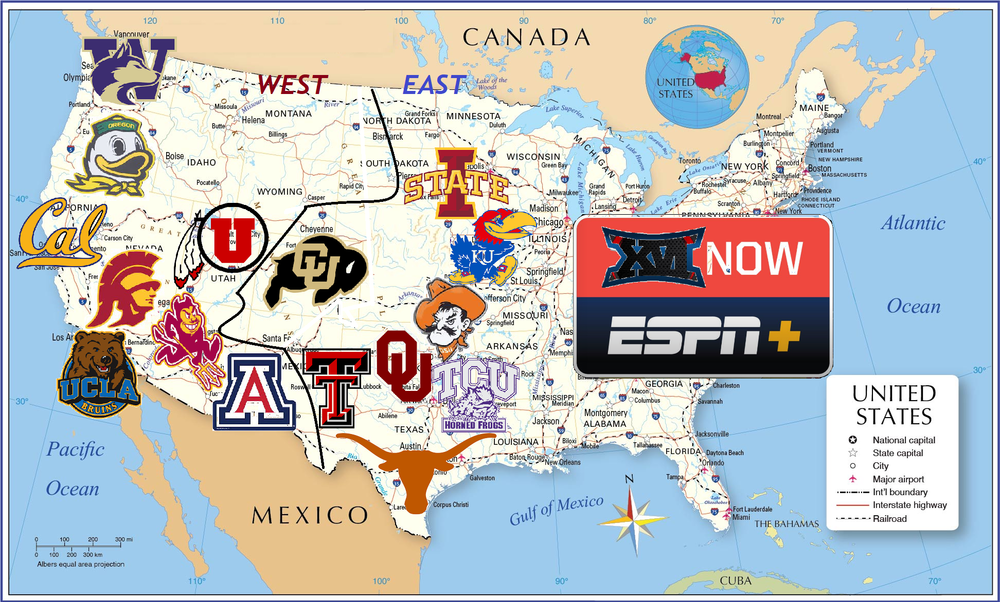
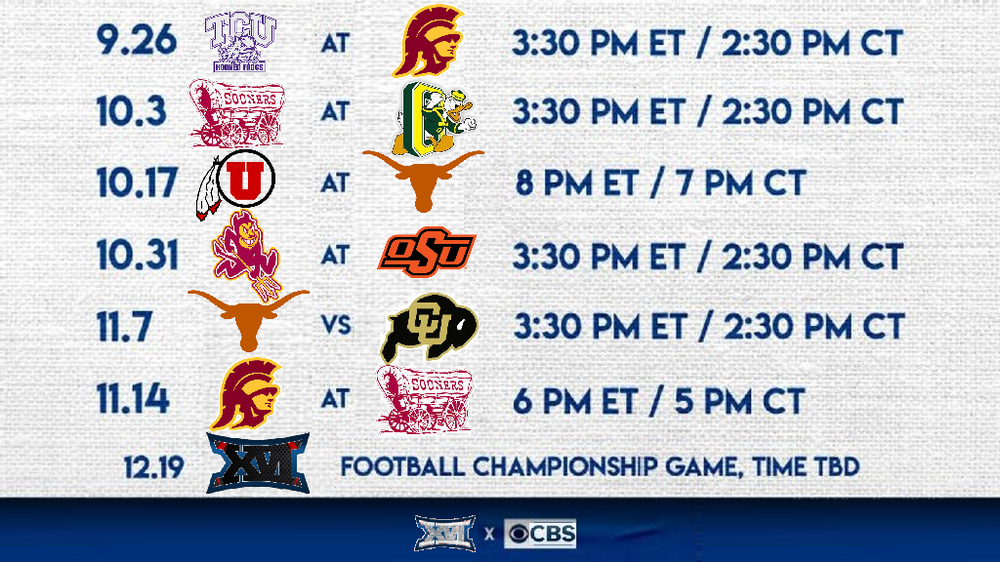
Someone over on the dirt site posted an article that is supposedly of UT wanting to leave XII..? And ranked a "tier system" for all schools... Iowa State/ Kansas/ Oklahoma/ Oklahoma State/ Texas/ TCU/ Texas Tech/ Colorado/ Utah/ Arizona/ Arizona State/ USC/ Oregon/ Washington = 14... That's 9 AAU brands, not counting if merged league could add one of (or both) UCLA &/ or California too, giving double-digit AAU schools & rivalries... --- Originally posted by OU48A View Post This is not wrong from the perspective of UT.... Clearly not all Texas people are happy with this Big 12. https://www.burntorangenation.com/20...ger-conference Declarative statement: Texas needs to be in a new, or different, athletic conference. What would be ideal? What’s the goal? Who from the current Big 12 2 needs to stay . . . could stay . . . might have to stay to keep the league roster at a decent size . . . who needs to go? What schools would be the best targets for a larger, or a retooled, Big 12? This is written from a SOLELY Texas perspective. The future for Baylor or Iowa State is a topic for somebody in Waco or Ames. I would hope our athletic director and our administration have been working on this issue for several years. If not, they’re probably not going to position us any better than we currently are. Which is, I suppose, OK when/if/BIG IF we get the football program somewhere close to what it was the first decade of this century. Second declarative statement: I don’t think where we are is acceptable. Simply put: We need a conference with a larger footprint. I’ll describe footprint as a geographic reach or spread that takes in as many Tier 1 and Tier 2 schools as possible (read on); a conference that covers as many states/regions as possible. For excellence at this model, look at the revamped B1G and SEC, though the former has some flaws along with many excellent aspects. I’ll do a conference breakdown in a separate story in a day or two. I approach this "Texas’ place in the near the future" with the belief that we can do better. That we have the clout, we have money, we have (hopefully) the leadership and foresight to make it happen. We pretty much had what you’d want for the 15-year period ending in 2010. I believe the Big XII, or a new conference we help start, NEEDS Texas. Yes, we need conference brethren. But they need us (and Oklahoma) more than we need them. A package deal of Texas and Oklahoma, just the two, would make every conference in the country snap to attention and light up the phone lines. We are the IT factor. As Reggie Jackson famously said, "We are the straw that stirs the drink." We should not accept, or support, conference members, or prospective members, that have a smaller reach, fewer resources, than we do – simply because it makes sense on the map. We can do this because we can deliver significant as in massive dollars and lots of TV viewers and plenty of fans who will travel anywhere, given program success and the right conference membership. Much more on this in my overview of the Big 12. There will be several parts to this prospectus. I’ll offer opinions, which I back up (maybe not very well). There will be potential solutions, several, which will come at the end. Declarative statement No. 3: The current conference does not serve our needs. Neither did the Southwest Conference . . . not as the college game became more national, and more and bigger markets and fan followings and potential television viewers became critically important. The original Big 12 served us well. It fit what I’ll call the "right template" as to quality and makeup of member institutions. It was geographically coherent. The breakup of the original Big 12 has left us competing (not well, much of the time; that’s a coaching issue) with a shallow, hollow league with too few heavy hitters to attract the kind of TV package – and thus, the recruiting clout and multiple major bowl chances each year – that the University of Texas can, and should, demand. part 2 https://www.burntorangenation.com/20...ower-5-schools I wrote yesterday about the need for Texas to find new partners in a new conference – or, new members in a revamped Big 12. Need, as in why stay in a conference with schools that are in smaller states, that have smaller budgets, and that rely on Texas and Oklahoma to retain their Power 5 status? Today, I look the 65 schools that constitute Power 5. I’ll do this by placing schools in tiers, from strongest to weakest: State or public schools first, followed by the private/church schools. The best thing a conference can have – speaking from a football point of view, but it can include other sports – is what I call PRIMARY STATE universities. This is the top, the elite of the elite athletic programs, especially football, in larger states. Or schools that have large student enrollment and ample booster backing and the kind of facilities that can/should produce regular Top 10 to 15 finishes. There are around a dozen of these PRIMARY STATE schools: Alabama, Florida, Georgia, LSU, Penn State, Michigan, Ohio State, Oklahoma, Texas and, I suppose, Washington and Oregon. This is Tier 1. California is its own little (well, too big) world. No easy fit from the Golden State in this tier. Tier 2 is major public universities, many in mid-size states, some in larger states that are not the PRIMARY STATE university. (Texas A&M readers are not going to like this designation.) This group consists of Tennessee, Texas A&M, Missouri, Auburn, Colorado, UCLA, Wisconsin, Iowa, Michigan State, Florida State, Miami, Clemson, North Carolina and Louisville. Clemson is Tier 1 – but it hasn’t been in the past and it might regress once the current head coach leaves; South Carolina is not a large state and not every coach will recruit like Dabo Swinney does. Wisconsin has been Tier 1 for close to 15 years, but it wasn’t for a long time and it’s easy to see where it could fall down a rung, or two, as has happened to Nebraska, Tennessee, Arkansas. Tennessee belongs in Tier 1 – it has the size and backing but has made a series of dreadful coaching and administrative decisions and is decidedly a rung below the big four (six, with Texas A&M and Auburn) in the SEC. Tier 3 is a smaller/less-financed version of Tier 2. Mostly smaller states: One or both of the Arizona schools fit here, one or both of the Mississippi schools, Utah, Arkansas, Nebraska, Minnesota, Indiana, Kentucky, South Carolina, Virginia Tech, Pittsburgh, North Carolina State, Oklahoma State, Texas Tech, West Virginia. You could argue Virginia Tech belongs higher; it’s the largest public school in its state, but it’s almost in West Virginia geographically, and has displayed – in recent seasons – a significant slip from the excellence of the previous two decades. Tier 4 is Tier 3 on a smaller level . . . Oregon State, Washington State, Cal-Berkeley, Kansas, Kansas State, Iowa State, Maryland, Purdue, Rutgers, Illinois. It’s important to look at where a school CURRENTLY IS, and what it’s likely to be over the next decade. Not what’s happened in the past. K-State was Tier 2 until recently, probably ceilings at Tier 3 unless the 50-year-old version of Bill Snyder resurfaces. Private/Church – Notre Dame and USC are on the Tier 1 level . . . Stanford might be – it clearly is when the school’s entire sports program is considered – but I’m putting the Cardinal in Tier 2 . . . Baylor, TCU, Boston College, Virginia, Northwestern, Syracuse are Tier 3, though the Orange are trying hard for Tier 4 . . . Georgia Tech, Duke, Wake Forest, Vanderbilt are Tier 4. You could put the first two of these higher; Duke belongs in Tier 3 as long as Mike Krzyzewski is running the basketball program. Some of these have had stretches where they were Tier 3. Brigham Young is classed as a Group of 5 member; they’re a football independent I would rank below Stanford and pretty close to Northwestern or UVa. BYU is close to Tier 3 status except that its football schedule is weak enough (largely Group of 5 teams) that it’s not considered Power-5. The placement is arbitrary. The right coach could take a Nebraska or Louisville close to Tier 1. The wrong coach could take an Oregon or a Texas to Tier 3. (Don’t say it; I was already thinking it . . .) --- I personally have no issues [as I've said before] of Oklahoma looking to be in a larger footprint (along with UT)...In doing so together as to hold the most logic, but to think an expansion/ merger isn't an option would be false...Tier 1SEC - Alabama, Florida, Georgia, LSU,ACC - Clemson, Notre DameB1G - Penn State, Michigan, Ohio State, WisconsinXVI - Oklahoma, Texas, Washington, Oregon, USCTier 2SEC - Tennessee, Texas A&M, Missouri, Auburn,ACC - Florida State, Miami, North Carolina, LouisvilleB1G - Wisconsin, Iowa, Michigan State,XVI - Colorado, UCLA, StanfordTier 3SEC - Ole Miss, Mississippi State, Arkansas, Kentucky, South Carolina,ACC - Virginia Tech, Pittsburgh, North Carolina State, West Virginia, Boston College, Virginia, SyracuseB1G - Nebraska, Minnesota, Indiana, Northwestern,XVI - Arizona, Arizona State, Utah, Oklahoma State, Texas Tech, TCUTier 4SEC - VanderbiltACC - Georgia Tech, Duke, Wake Forest, DukeB1G - Maryland, Purdue, Rutgers, IllinoisXVI - California, Kansas, Iowa State Note, that Nebraska, 1 decade after the move, by this opinion, has the Cornhuskers as "Tier 3" take it as such..?Again, the "XVI" stacks up well as an option for OU & UT, as logistically, Great Lakes west is 999 miles for UT...Now, keep in mind, that article is subjectively based on opinion, as well as teams rated, meh XII needs growth...And growth UCF/ USF is not the same as [potentially] Oklahoma & Texas weilding power to raid USC/ Oregon... --- My thoughts are this stuff's still somewhat fluid especially if we may be looking at an impending market correction before the 2025 GoR... Keep in mind this proposed alignment would pay 14 members $65 million each/ and a 16 member setup would still pay $57 million (before a 3rd tier)... That's before discuss of 3rd tier backed by Disney streamed on ESPN+, can place 1st & 2nd tier games on ABC/ ESPN/ ESPN2... *Split tier 1 on CBS..?
-
I don't know how probable this might be, it could just be for clicks, but its far more than most speculation now... If USC was getting an indy 3rd tier deal similar to UT and OU may at least give a reformed league a "look-into"... As to realignment I've bigger things to worry of, like when will Oklahoma City get an In-N-Out Burger [kidding]...
-
He'll talk it over with the "all-defense" Pat Bev...
-
Nebraska is having a 'buyer's remorse" moment it seems, wanting to hire former player with XII ties/ wanting to play an old rival for charity... I have a lotta fond memories as a kid watching OU pummel NU [well, let's forget the 1990's] but I'd like to see Arkie & UT hook back up too...
-
Well "student-athletes" get a big ol' sack of food... The coaches, get a big ol' sack of cash (millions)...
-
Dropping 2 games per school..? That's quite the reduction in revenues by the networks who give us such "glorious purpose"... This may never occur, but in an 'alternate universe' Oklahoma/ Texas & USC/ Oregon would be wise in the same conference... We shall see if PAC can rectify its issues & likewise XII has some 'splaining to do with networks near 2025 to growing league...
-
It's just a "tomato/ toma' to" kind of realignment/ NCAA/ stipend/ NIL, situation (or however that goes)...?
-
https://i.imgur.com/bn0Exzm.png So... This is a "thing" for Nebraska & Colorado fans..? It almost sounds like they miss "home"... https://i.imgur.com/8HERZoD.png
-
Not "Loki" but have you heard the rumor, that since AT&T sold Warner/ DC to Discovery, it is willing to talk of amalgamation as was done in comics..?| Can you imagine having a movie to where Deadpool teams with Batman, as a crossover event..? Or Suicide Squad v Guardians of the Galaxy..? Cool...
-
Well, there was what seemed to be out-of-left-field talk a few years back, speculation of a XII and PAC scheduling alliance: --- Big 12, Pac-12 strategic alliance would make both stronger https://www.mercurynews.com › 2019/02/26 › former-... Feb 26, 2019 — A former Big 12 president has proposed that each team play three non-conference games against teams from the other league. That might be ... -- Big 12/Pac-12 scheduling alliance in the future? https://oklahoman.com › article › ex-kansas-state-presid... Feb 26, 2019 — Former Kansas State president Jon Wefald has proposed a scheduling alliance between the Big 12 and Pac-12 conferences in which every Big ... --- Maybe that is one way to reduce to 8 conference games, while adding in PAC foes/ BYU/ and a few top ACC games as well..?
-
Now "Every Game Matters" with new & improved CFP recipe..? https://ispot.tv/a/dphG
-
Yep , on the dirt board it was all the talk for a week or so... XII needs to see if it can swoop in and get the "primetime" 2:30pm slot... That would work well for the league long term, now with the idea of an expanded CFP to 12, more focus needed on XII 3rd tier net..?
-
Let me know when most leagues start making deals, 4 years before a contract is up... At this rate B1G is 2 years overdue (kidding) I think XII should look at expansion now...
-
This talking point "stability" works for the conference that has won 12 of the last 20 college football titles... https://worldpopulationreview.com/en/state-rankings/whitest-states This probably can also (as far as athletics) be the end result of regions dense in athletes to recruit as well... -- South and West to Gain Power in House of Representatives ... https://www.wsj.com › articles › south-and-west-to-gain-p... Apr 27, 2021 — Several states in the South and Mountain West will gain more seats ... South and West to Gain Power in House of Representatives, Expected to Favor ... Texas, with its growing population, will gain two more seats in Congress. Southern and Western Regions Experienced Rapid Growth ... https://www.census.gov › south-west-fastest-growing May 21, 2020 — The South leads the way with 10 of the top 15 fastest-growing large U.S. cities, according to new population estimates for cities and towns. --- If college football is squeezed to a point of regionalism, the stability favors regions with population growth...
-
It will happen by 2036/ 2037, as at hat point the money from the most powerful generation (boomers) will be wiped out... That more or less leaves needing new sources to fill the gap, adds from a 16 team CFP would be a great draw for all P4... I gather in mid-2030's ACC contract will be reshuffled, as well, any final moves for B1G/ SEC, and any swaps in PAC/ XII... So, we might have another "calm" of 11 years (if we make it past 2025) as is some may not know OU is ticked with Bally...
-
Maybe XII just reforms the league after pulling the crown jewels out west... Signs a long term deal with ESPN, who has helped branding of ACC/ SEC... Comparative bowl game records since 2000: The top tier of XVI would sit competitive: Oregon: - 10W/10L - 0 national titles... Oklahoma: 10W/ 11L - 1 national title... Texas: 14W/4L - 1 national title... USC: 10W/6L - 2 national titles... Versus the best of ACC (ESPN partner): Virginia Tech: 9W/11L - 0 national titles... Miami: 7W/12L - 1 national title... Florida State: 12W/8L - 2 national titles... Clemson: 13W/ 11L - 2 national titles... Versus the best of SEC (ESPN partner): Auburn: 10W/9L - 1 national title... Florida: 11W/8L - 2 national titles... LSU: 14W/7L - 2 national titles... (wait for it)... Alabama: 16W/8L - 6 national titles... Maybe all should worry about B1G foes: Ohio State: 12W/ 10L - 2 national titles... Nebraska: 8W/8L - 0 national titles... Penn State: 7W/7L - 0 national titles... (wait for it)... Michigan: 6W/12L - 0 national titles...
-
#Throwback... Nebraska mighta-shoulda stayed with ol' rivals..? (Oh yeah, & in the post above, I am really keen to seeing the September 18 game in Norman, that should be fun[ny])...
-
2/ 1/ 3...
-
If the Bearcats can pull off the win, it's another "loss" for aggy... (haha)...
-
A pretty good test for Frost will be on September 18, 2021, vs Riley... (Some fans are [semi] erect about the rivalry):
-
But aggy is a loser stuck in purgatory...In other news, I think Ohio State will give Clemson fits, but I'll pull for Dabo due to this quote: