
Reagan1k
Certifiably Surly
-
Joined
-
Last visited
Everything posted by Reagan1k
-
Maybe it's just me, but I'm a sucker for an old school hill country straight 8.
-
Sark is the OC Thus, the ultimate in ballsy accountability.
-
Just when I said I was done buying guns for the year, Marlin quietly drops a Trapper series lever action in 10mm. Why.....Why not? Oh well...January is for resolutions anyway.
-
I've stayed there and as was said above, it is "unique". Nice place though! It can be loud, especially if you're getting in bed before the last of a wedding crew gets tucked in. Either stay up and be the loud one getting in late/early, be mentally lubricated so you don't hear anything, or bring a fan/sleep machine to drown it out. Worse on the 1st floor of course. Lighting in most rooms leaves a little to be desired (understandable in the context of a restored old church) so if your wife/GF/hooker will care about that while getting ready, be prepared with a lighted makeup mirror. That was the only issue I heard out of my crew. Rooms are not cookie cutter so you may have a structural beam in the middle of or weirdly shaped oblong room, but in understanding what it is and why you're there that shouldn't be an issue. It's certainly got charm and the appeal of something historic that was preserved. If the wedding is there (they have a chapel / reception area and do lots of weddings) then it is definitely advantageous to be there. Might be harder to justify if the wedding is elsewhere. It's neither the Ritz nor a Hampton Inn, but it isn't supposed to be. The Who Dat Cafe is a few feet away and is a great spot for breakfast and to watch some of the local characters. We've done a second line from there to Frenchmen and it was, er..um.... interesting.
-
No first hand experience but a buddy just got the Ethos in 28ga and can't quit talking about how much he loves it.
-
"But the time is wrong......." is my favorite fight.......as if they deer are checking setting their watches back and then checking the time.
-
-
Not disrupting / Sorta funny I guess..... On a flight out of ORD last week.... I was already seated on the aisle during boarding and something caught my eye. Down the aisle comes a labradoodle whose coat had been dyed to look like Tigger the tiger and the owner was a "little person" in a Dopey costume. Guess he was either getting geared up for halloween or DGAF, but when I first saw it I figured I was having an aneurysm and that was how it was all going to end for me.
-
@partytimesausage It really all depends in the amount of 1099 income, how much you can defer, and your ability to reasonably predict how steady that income will be. A solo 401(k) with employee deferrals and an additional profit sharing contribution gets you to a healthy number. If you want even more than that then it is possible to structure and fund a defined benefit plan that could allow 6-figure contributions depending on your age. With the latter you have to consider the additional costs of administering the plan. Nice dilemma. Get a pro to help you crunch the numbers and figure out the best route.
-
How much 1099 income are we talking about and how much of it are you willing to squirrel-away?
-
Historically that's exactly what happened. People would sign up for a deferral and then not make a fund selection. Poor enrollment practices and lack of education often contributed to this. Employers erred on the side of caution and made the default setting as cash. That changed with the new laws and the automatic enrollment for certain plans. In an uncommon display of common sense, the feds issued some guidance and gave sponsoring employers the ability to choose a Qualified Default Investment Alternative (QDIA) for automatic enrollees that not only benefits the employee over the long run, but also shields the plan sponsor from liability over losses. Considering all the stupid shit they've done, this specific provision was not one of them in my estimation. Edit - There could still be some legacy plans with shit for enrollment provisions and shit for options, including the default I would presume.
-
Not sure of circumstances but sounds like a relatively recent hire / enrollee in this plan???? This was a significant change in the Secure Act for new plans and some older plans also adopted it. Employee is automatically enrolled in the 401(k) and can opt out, vs. employee having to proactively opt in. Most sponsors then elect to have the default investment be a target date fund matching the employees age....unless/until the employee changes it. Tough to argue that it is an improper investment when it is aligned with age and generally accepted allocation profile....Gives the plan sponsor and trustee some legal cover that they did the best they could for the employee. Avoids sticking the employee in cash and then having to deal with them coming back 25 years later saying "why didn't you tell me?". Whole lotta trying to protect people from themselves and playing the human nature game.
-
Congrat! Those are awesome bucks.
-
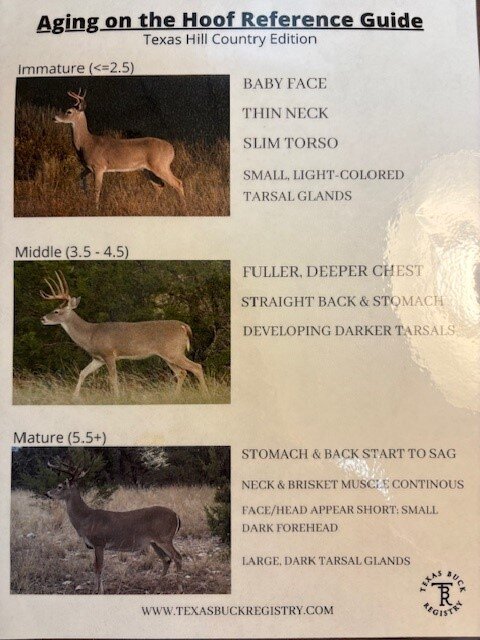
If that's a low fence hill country buck he's mature in my experience. If I'm wrong then its the difference between being 4.5 and 5.5 but I'd lean to 6.5. Hill country bucks are so tough to age unless you can get practice with verifiable photos or sightings over a series of years. I've always said they age on the fringes. Their backs and bellies start to sag and their nose starts to bull, but it's seldom obvious. It's never as pronounced as a South Texas buck or midwestern animal. It's nuanced. It mostly shows up in mass (check), often in coloration (check), and in character points or stubble around bases (check), especially if they aren't surviving solely on protein year round. The more they're relying on native forge, the more I always lean to older than they look and vice versa - if they have year round protein. We use this sheet to help with newer hunters or anyone who's hunted outside the region. It's pretty helpful and goes along with what we've seen in management practice for a long time.
-
That's fantastic. I'm happy for them. Their food was great (in the truck) and they were very nice. I always made it a point to pick up pizza there whenever I could but its been a while since I've stopped in town and I missed the move. Can't wait to try it out.
-
Are those the same folks who had the food truck on the outskirts for a few years? Name sounds awfully familiar.
-
100% right. There are other diagnostic tools that give a more complete picture, including distinguishing the type of plaque and risk there-in. Calcium score is a good start and especially for someone young to establish as baseline. I've done the Cleerly scan among other things on top of the calcium scan.
-
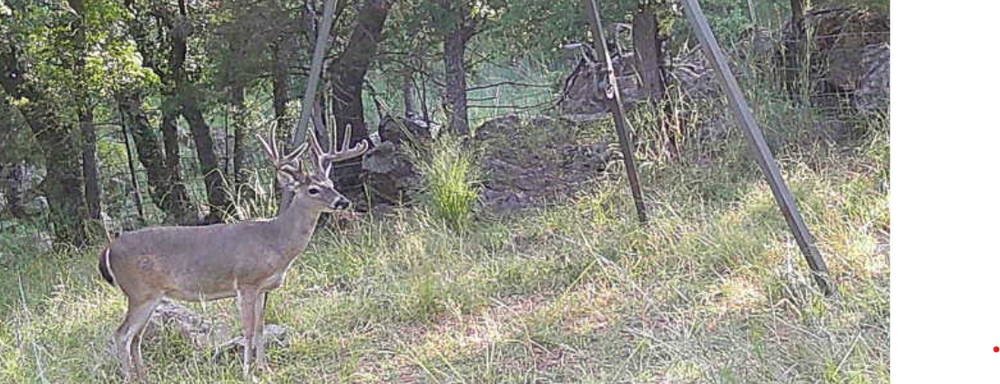
Another nice buck - He broke a main beam last year He's 6 by my math/history. Main frame 5x6 with a split brow tine to boot.
-
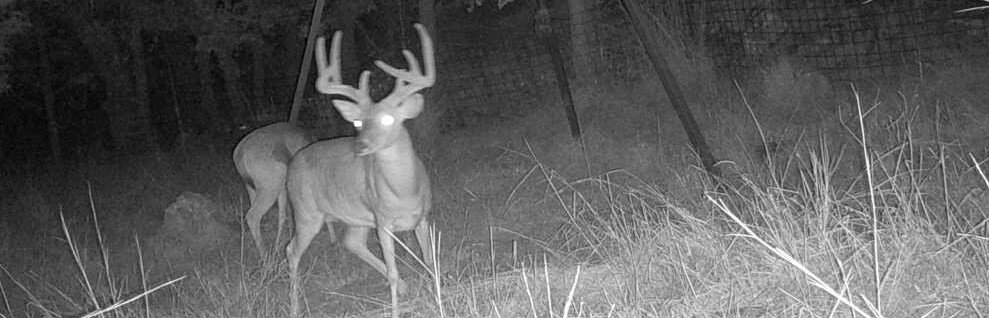
Letting them grow - '22, '23, '24, '25 He's 6 or 7 now by my math. Pretty cool. Even hill country bucks can get some respectable headgear if given a chance.



-
I thought that was universally known as an order of "fried fried"?
-
Yep - Ask if your plan has a True-Up Provision or not. "Most" plans now have it....not all...but more likely than not.
-
Yeah - I think this was the observation I had and was trying to convey with my real world example, and it may have read as "let them eat cake"....which was not my intent. Modeling out the what-if and extending conversions into that next bracket from 22 to 24 could be a worthwhile exercise when you take into account the likelihood of a period where there is a single filer. It's counter to what the general advice boilerplate advice would be but MIGHT be useful especially if one spouse isn't in great health or is fighting family history.
-
For better or worse I've fallen into the role of financial sounding board for several family members and I'm seeing this play out too - both sides of the coin. One giving with the only requirement being that the recipients then spend time with her to tell her all about the food they ate, the trip they took or the experience they had. She's enjoying her money vicariously through the while she can. Another is squeezing her dollars so tightly that the ink is oozing out of her fingers. Both have the same general amount of assets. Guess which one is happier day to day?
-
Yep....As I said....It is a good problem to have and the couple was obviously affluent (through building their own business from the ground up and diligent savings). They achieved most of their pre-tax savings before the Roth was a thing and then failed to take advantage of roth conversions - Big mistake on the latter. My point in all of this was the bigger picture and how conversion tax planning should also take into account the "what if" possibility of single filer vs. MFJ in 10-15 years. The same would be true for the 22-30 brackets and a couple that is not as affluent, but still has sizable pre-tax balances. If those conversions don't hit while still MFJ, then that ship might sail. Assuming that one has many years to convert in the 22-24 brackets is fully dependent on maintaining that filing status.
-
I know it has been discussed a lot upthread and I intellectually knew the importance of long term tax planning, but damn...watching the lack thereof play out in real life in jolting. I'm helping a family member who is recently widowed get their affairs in order and the double tax hit of RMDs plus the compression of the single filer brackets is staggering. This exercise has made me rethink and take a second look at what i've done b/c a lot of my planning has been based around the MFJ brackets and I hadn't fully digested the what-if / when there's a single payer. Those 32 and 35 brackets come screaming up really quickly for a single payer with sizable taxable income due to pre-tax qualified plans or other taxable income. Good problem to have nonetheless but damn, it hits hard and fast for an accumulator with high taxable income after the death of a spouse.